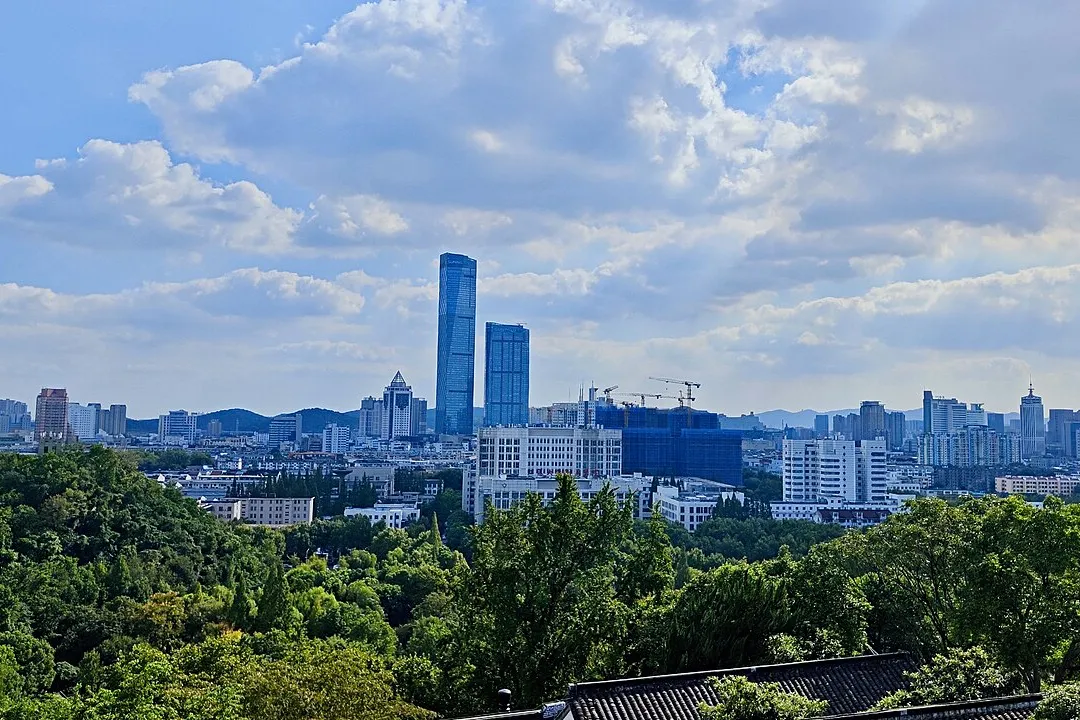
Why this place
Zhenjiang sits where the Grand Canal meets the Yangtze, which made it a strategic crossing for two thousand years and a grain-transport hub. It is famous in China for black vinegar — the same style as Shanxi's, made here by a method said to go back to the Tang, and taken very seriously. The river and the old ferry street give it a compact, atmospheric centre.
People and culture
- Zhenjiang's position where the canal meets the Yangtze made it the choke point of the grain transport to the north, and the old wharves were among the busiest in the empire.
- The city's black vinegar (xiangcu) is made by a fermented-grain method claimed back to the Tang, and the local brand is the standard against which others are judged.
- Jinshan Temple is the setting of the legend of the White Snake, a folk tale known to every Chinese reader, which is why the hill is crowded with pilgrims.
- Zhenjiang was a treaty port after 1861, and the foreign warehouses along the river are the trace of that brief international moment.
- The city guards the southern bank of the Yangtze crossing that armies used for two thousand years, which is why so many battles are attached to its name.
What to see
- Jinshan Temple, on an island-hill in the river, the setting of a famous legend about a snake spirit
- The Yangtze riverside and the old canal confluence, where the two waterways meet
- Xijindu, the old stone-paved ferry street, which is the most atmospheric part of town
- Beigu Mountain and the Ganlu Temple, with a wide river outlook
- Jiaoshan, an island hill with stone inscriptions and a quiet temple
- The river-mouth park, for the wide water view
What to eat
- Zhenjiang black vinegar (xiangcu) buy a bottle, it is the local standard
- Yangtze river fish: shad and pufferfish are the local delicacies in season
- The vinegar-braised dishes that use the local product in cooking
- The river crab and the steamed buns of the ferry quarter
How to plan
Spend a morning on Jinshan Temple and its hill, then walk Xijindu, the old stone ferry street, for tea and the river view. Afternoon goes to Jiaoshan or Beigu Mountain for the Yangtze outlook. Zhenjiang is twenty minutes from Nanjing and on the line to Shanghai, so it works as a half-day stop between the two, or an overnight if you want the vinegar and the quiet river towns.
Best time
April–May for the shad season; October–November for the riverside
Practical tips
- The shad and pufferfish are seasonal and pricey; ask the price before ordering at a river-fish restaurant.
- Xijindu is best at dusk when the stone lane is lit, but the small shops close early outside holidays.
- Zhenjiang's station is on the Nanjing–Shanghai high-speed line; most visitors pass through rather than stay, which keeps it calm.
This browser has no speech synthesis, so the ▶ buttons stay silent. Everything else works — Chrome, Edge and Safari can read the sounds aloud.