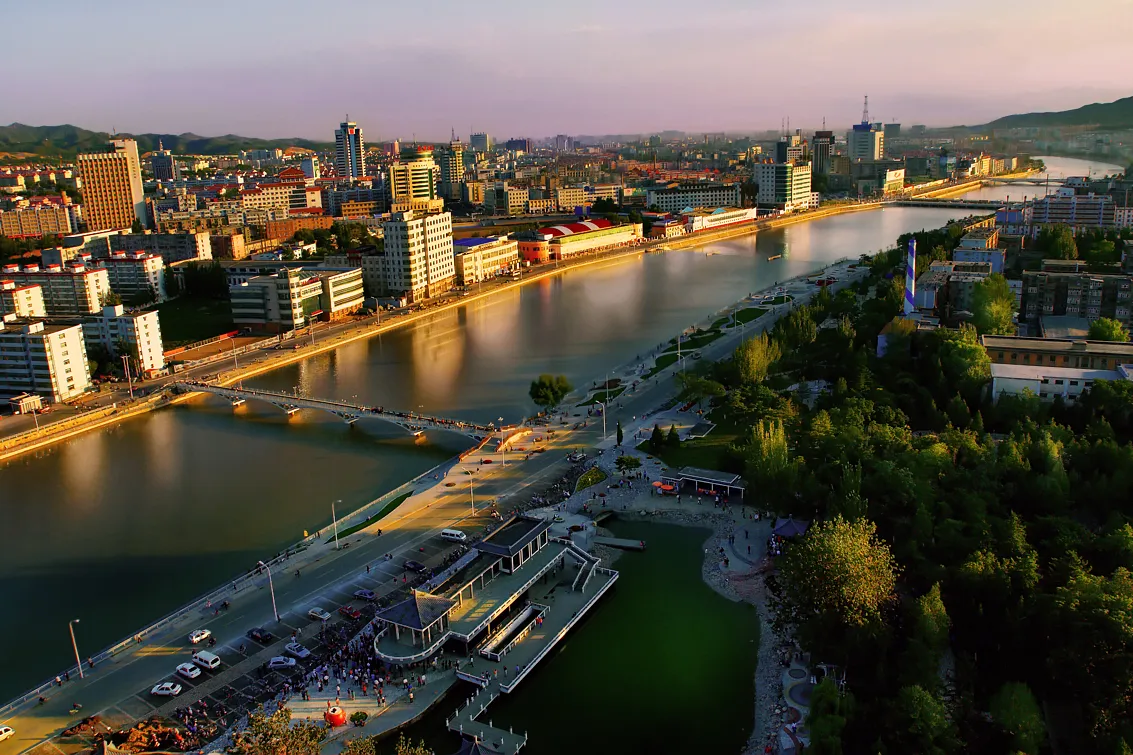
Why this place
Zhangjiikou is where the Great Wall's gates let caravan traffic through to Inner Mongolia and on to Russia — it was the starting point of the tea road that moved brick tea north on camels for three centuries. It also hosted the snow events of the 2022 Winter Olympics, so a frontier town that once shipped tea to Kyakhta now ships skiers to the same mountains. The mix of wall, grassland and alpine resort is unusual in one small region.
People and culture
- Zhangjiakou's Dajing Gate was the mouth of the tea road, the overland trade that carried brick tea from the Yangtze hills to Mongolia and Russia on camel caravans for roughly three centuries.
- The city sits astride the wall where the North China Plain meets the plateau, so for most of history it was a customs gate and a garrison rather than a market — the gate is the symbol, not a shop.
- The 2022 Winter Olympics put the Chongli ski slopes on the world map; what was pasture and mine is now a cluster of resorts with Nordic and alpine courses.
- Zhangjiakou is a meeting point of Han, Mongol and Hui food and speech, visible in the mutton, oat noodles and the Muslim noodle stalls along the old road.
What to see
- Dajing Gate, the Ming wall gateway into the grasslands, now a museum and street
- Chongli ski resorts, built up for the 2022 Games and still operating
- Bashang grasslands on the Inner Mongolia plateau, north of the city
- The Great Wall at Dajing and the preserved wall walk above the gate
- Yuxian (Yuzhou) old town, a walled county with Ming theatre stages
- The Guyuan grassland and the remnants of Yuan-era summer camps
What to eat
- Lamb the area is sheep country; try the boiled mutton and blood sausage
- Oat noodles (youmian), a local staple on the plateau edge
- Huoshao stuffed with mutton, the road-town version of the northern burger
How to plan
In summer, take a morning to Dajing Gate and the wall museum, then a bus north to the Bashang grassland for an afternoon of riding and yurts. In winter, base in Chongli for two days of skiing and the resort town. The tea-road story is best told at Dajing Gate, where the gate itself and the old customs street show how the camel trains left. Zhangjiakou is under an hour from Beijing by high-speed rail, which also serves the winter resorts.
Best time
June–September for grass, December–February for skiing
Practical tips
- Chongli is a separate mountain county — budget the resort transfer, not just the city
- The grassland is cold at night even in July; pack a warm layer
- High-speed rail from Beijing makes Zhangjiakou a feasible day or ski weekend
This browser has no speech synthesis, so the ▶ buttons stay silent. Everything else works — Chrome, Edge and Safari can read the sounds aloud.