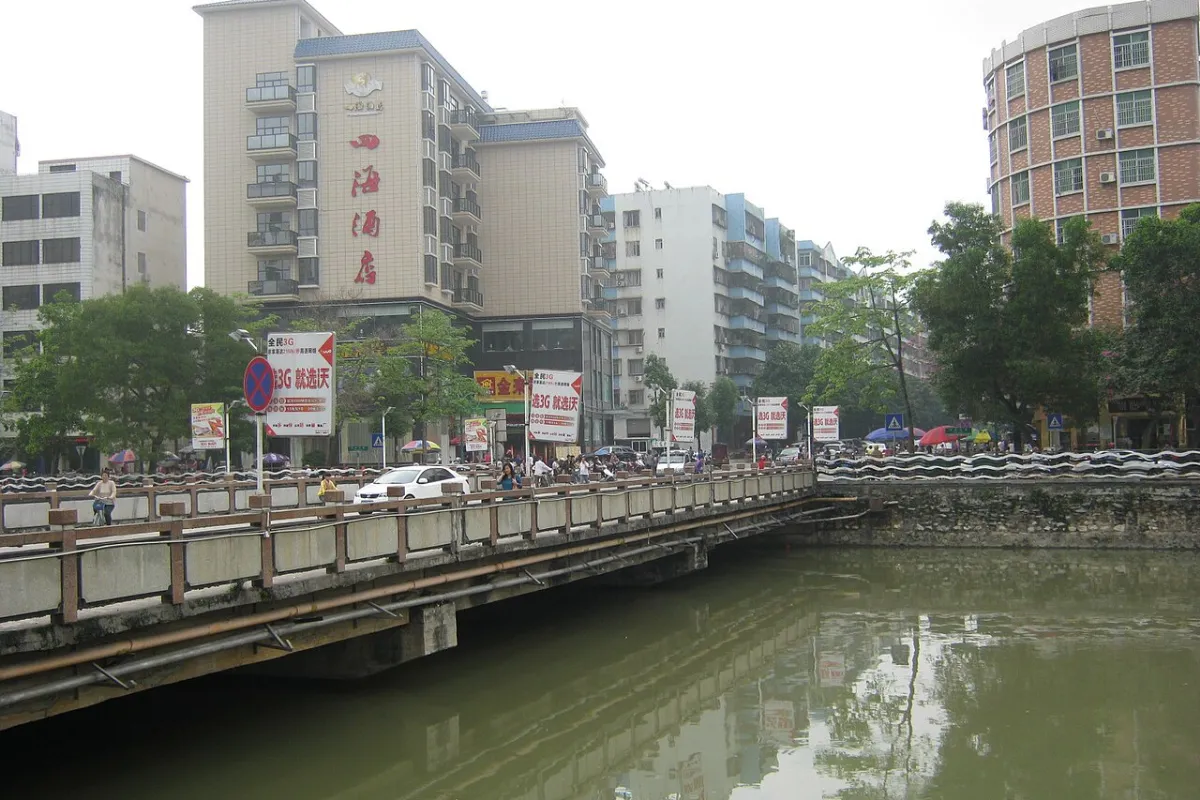
Why this place
Yunfu is China's stone-working city — it supplies a huge share of the country's marble and granite products — and it sits in the hills west of the Pearl River delta. It is a working city, not a tourist one, but the stone yards are remarkable in scale and the surrounding counties hold Sixth-Patriarch Buddhist temples and hot springs. The sheer scale of the stone trade and the quiet Buddhist hills around it make Yunfu an unlikely but genuine stop for travellers interested in Chinese craft industry and Chan history alike, away from the main delta crowds. The city also preserves working stone-carving courtyards where master cutters still hand-finish monuments for clients across the country.
People and culture
- Yunfu supplies a large share of China's processed marble and granite, with stone yards on an industrial scale.
- The city is a centre of the stone-carving and monument trade serving the whole country.
- The Liuzu (Sixth Patriarch) temples in the hills connect Yunfu to Chan Buddhist history.
- Xinxing county within Yunfu is known for its hot springs and its rice-noodle products.
- The Tianlu Mountain area preserves forest and waterfall scenery west of the delta.
What to see
- The stone-processing yards and the stone trade exhibition, which is the city's identity.
- The Luoding and Xinxing old towns, and the Liuzu (Sixth Patriarch) temples of the hills.
- The Tianlu Mountain and the hot springs of the surrounding counties.
- The Yunfu stone museum showing quarrying and carving.
- The Guo'en Temple area linked to the Sixth Patriarch's teachings.
- The reservoir and forest parks of the western hills.
What to eat
- Cantonese country cooking and river fish.
- Yunfu's Xinxing rice noodles and its preserved meats.
- Hakka-style dishes in the inland counties.
- Hot-spring-area farm food around Xinxing.
How to plan
Plan a day and a half. Morning at the stone yards and the stone museum to see the scale of the trade, then the Luoding or Xinxing old towns. Afternoon to a Sixth-Patriarch temple and the Tianlu Mountain or a hot spring, ending with Xinxing rice noodles and preserved-meat dishes. A dusk walk through a stone yard lit for the evening shows the scale of the trade better than any museum could, before a Xinxing rice-noodle and preserved-meat dinner nearby at dusk.
Best time
October–December and March–April
Practical tips
- The stone yards are industrial sites — arrange a visit rather than wander.
- Hot springs near Xinxing need advance booking on weekends.
- Yunfu is a stop between cities; pair it with a Zhaoqing or Wuzhou route.
HSKHSK level 2
This browser has no speech synthesis, so the ▶ buttons stay silent. Everything else works — Chrome, Edge and Safari can read the sounds aloud.