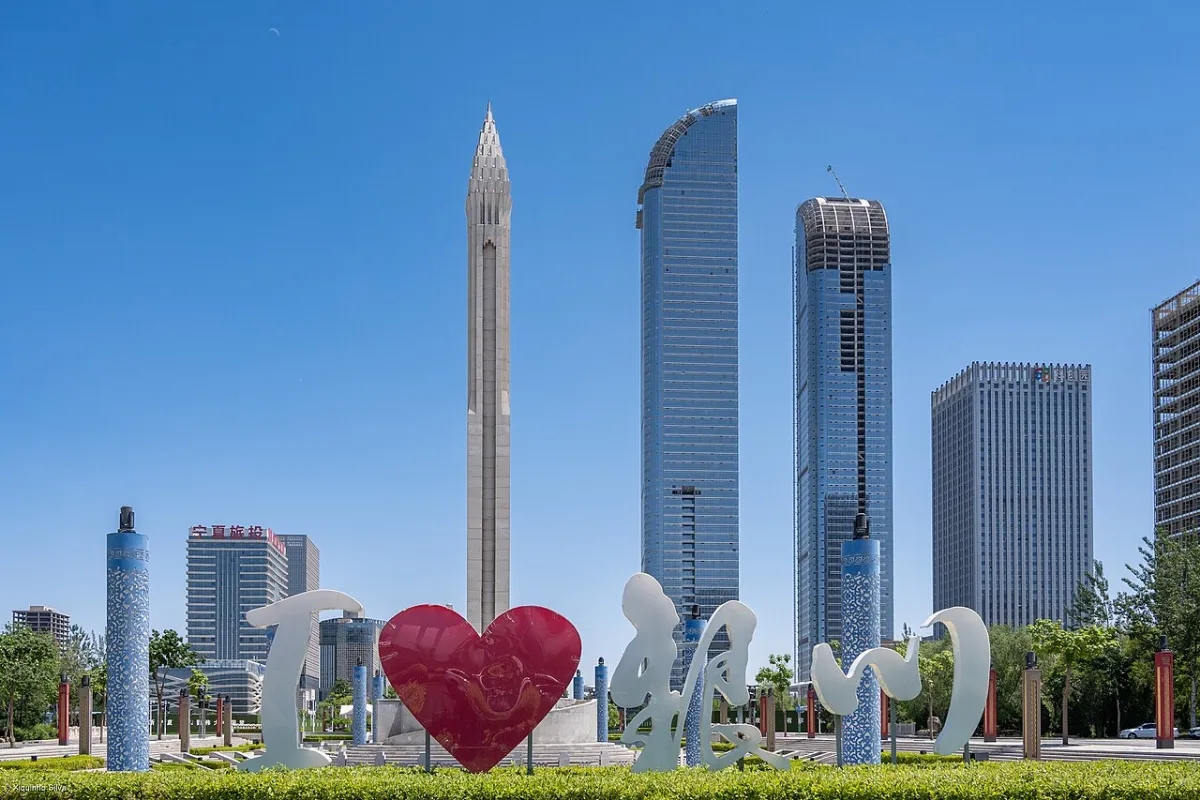
Why this place
Yinchuan is the capital of Ningxia, and it is a genuine oasis, the Yellow River channelled across the desert plain to produce rice, fish and vineyards where there would otherwise be sand. It was the capital of the Western Xia, a Tangut empire that left enormous tomb mounds in the desert and its own script. The city is also a Hui autonomous-region centre, with the Nanguan Mosque and food streets, and a base for the Shapotou dunes and the Helan Mountains.
People and culture
- The Western Xia was a Tangut-ruled empire that held the northwest for nearly two centuries and left the pyramid-like tomb mounds east of Yinchuan, with a script that is still only partly read.
- The Ningxia Museum holds Western Xia artefacts, including the square-seal script carved on stone and wood, a writing system unique to that state.
- Ningxia's tan sheep produce lamb regarded as the finest in China, raised on the saline desert pasture that gives the meat its sweetness.
- The Yellow River's irrigation here turned sand into rice paddies and vineyards, a feat of canal-building that has run for a thousand years.
What to see
- The Western Xia tombs, the pyramids of the east, imperial mounds in the desert with a museum.
- The Ningxia Museum, with the Western Xia script and Tangut material.
- Shapotou and the Yellow River desert scenery, two hours away.
- The Zhenbeibao film studios, where much of China's western cinema was shot.
- The Nanguan Mosque and the Hui food streets, since Ningxia is a Hui autonomous region.
- The Helan Mountains and the rock-carving sites on the northern ridge.
What to eat
- Hand-grabbed mutton, Ningxia lamb, tan sheep, regarded as the finest in China.
- Hui cuisine of beef noodles, lamb and the wanwan dishes.
- Ningxia wine, the Yellow River gravel plain produces much of China's best wine.
- Rice from the irrigated oasis and the local river fish, eaten with the lamb.
How to plan
Day 1: visit the Western Xia tombs and the Ningxia Museum in the city, then walk the Hui food streets and the Nanguan Mosque. Day 2: take a trip to Shapotou for the dunes on the Yellow River, or to the Helan Mountains for the rock carvings and the wine country. Yinchuan is a short flight or rail hop from Xi'an and Lanzhou, so use it as a two-day base for the oasis and the tombs.
Best time
May-October; the grape harvest and best weather are September-October
Practical tips
- Yinchuan's heat peaks in July and August, so the grape-harvest weeks of September and October are the most pleasant time.
- The Western Xia tombs are an hour from the city by bus or tour, and the museum there explains the script.
- Ningxia is a Hui region, so the food streets are halal, and respect the custom and try the lamb and the wine together.
HSKHSK level 3
This browser has no speech synthesis, so the ▶ buttons stay silent. Everything else works — Chrome, Edge and Safari can read the sounds aloud.