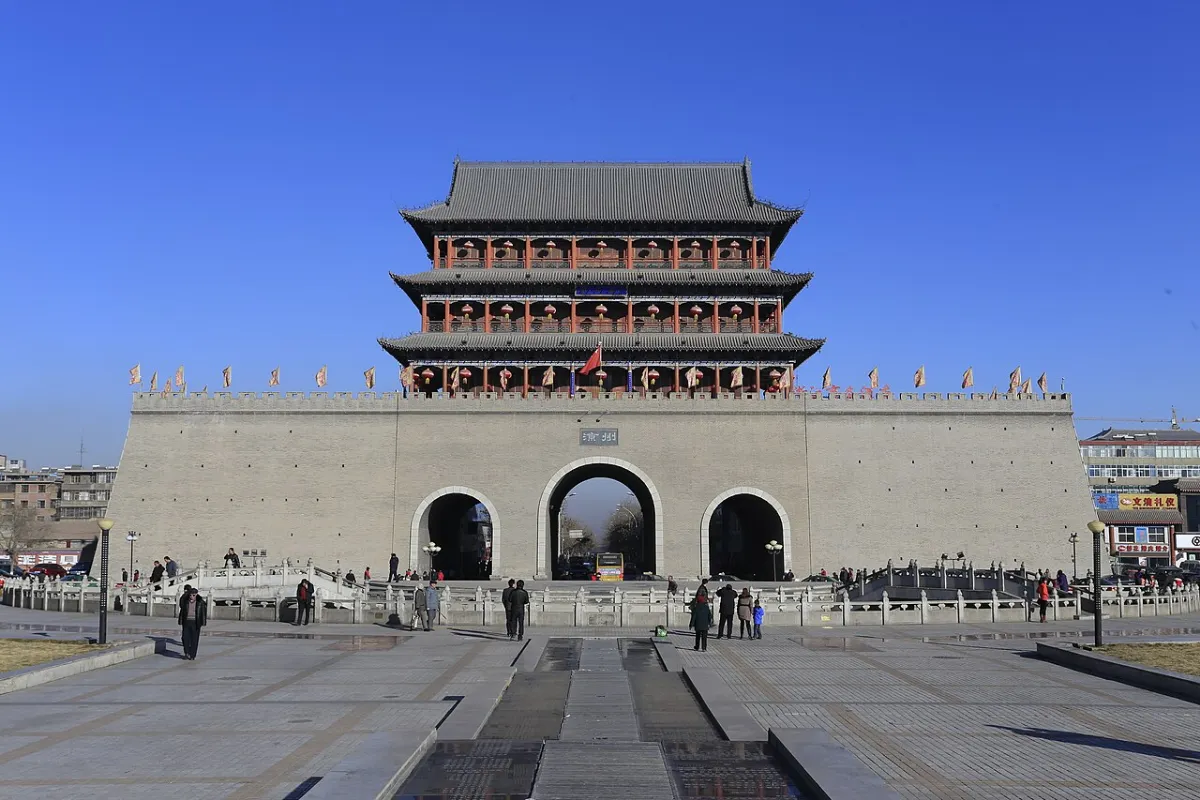
Why this place
Wuwei was a Han dynasty garrison town on the Silk Road, and it is where the Flying Horse of Gansu was excavated, a bronze horse with one hoof on a flying swallow that has become one of the most recognised images of Chinese art. The city also holds one of the largest Confucian temples in the northwest and a tall Tang pagoda, and it sat astride the corridor where the road from Chang'an met the desert. Today Wuwei is a calm, tree-lined stop between Lanzhou and Zhangye, with museums that explain the corridor's trade.
People and culture
- The Flying Horse of Gansu, found in a Han tomb at Leitai, is a bronze of a galloping horse balanced on one hoof on a swallow, now a national emblem of Chinese travel and reproduced across the country.
- Wuwei's Confucian temple, the largest in the northwest, was a centre of learning on the corridor and still keeps its pavilions and the old examination compound.
- The Kumarajiva temple honours the monk born here in the fourth century who translated many Buddhist texts into Chinese and shaped East Asian Buddhism.
- As a Han garrison, Wuwei guarded the corridor's eastern stretch, and its name means mighty and awe-inspiring, a statement of the empire's western frontier.
What to see
- The Leitai Han tomb, where the Flying Horse was found, and the Wuwei museum displaying it.
- The Wuwei Confucian temple, one of the largest in the northwest, with its pavilions and old trees.
- The Kumarajiva temple and the Tang-dynasty Great Pagoda in the city.
- The Qilian Mountains and the Hexi Corridor countryside south of the city.
- The desert ruins and the beacon towers along the old Silk Road east of town.
- The Haizang park and the city's green boulevards, a cooler rest stop.
What to eat
- Gansu lamb and hand-pulled noodles, the corridor staple in the city's lanes.
- Wuwei sanpao tea, a sweet brew with longan, dates and rock sugar, a local specialty.
- Liangzhou braised dishes and the region's dried fruit, eaten as snacks.
- Hui Muslim skewers and clay-oven flatbreads from the evening market.
How to plan
Day 1: visit the Leitai Han tomb and the Wuwei museum for the Flying Horse, then walk to the Confucian temple and the Kumarajiva temple with the Tang pagoda. Day 2: take a short trip south to the Qilian foothills or east along the Silk Road beacon towers, returning for a lazy afternoon in the city parks. Wuwei sits midway on the corridor rail line between Lanzhou and Zhangye, so it suits a relaxed one- or two-day stop.
Best time
May-October
Practical tips
- Wuwei is a midpoint stop on the corridor line, so pair it with Lanzhou or Zhangye rather than making a special long detour.
- The Confucian temple is working heritage, so visit in the morning for the quiet and the light through the old trees.
- The Leitai site is in the city and easy on foot, but the Qilian foothills need a driver, so plan transport ahead.
HSKHSK level 3
This browser has no speech synthesis, so the ▶ buttons stay silent. Everything else works — Chrome, Edge and Safari can read the sounds aloud.