Why this place
Tianjin was a treaty port from 1860, and nine foreign concessions left behind whole streets of European-style banks, churches and villas along the Hai River. It is also the port for Beijing, which gave it its own merchant culture — most visibly in its breakfast, which locals take more seriously than almost anywhere else in China. The city pairs that foreign-built riverside with a dense Chinese quarter of markets, canals and noodle stalls, so a short walk moves you between two centuries.
People and culture
- From 1860 nine nations ran concessions here, which is why a single riverside walk passes British banks, a French church, a German club and a whole Italian piazza reassembled from imported stone and brick.
- Tianjin calls itself the breakfast capital of the north; the habit grew from the docks and the rail yards, where shift workers needed hot food at five in the morning, and the stalls have been competing on technique ever since.
- The city is the birthplace of the crosstalk (xiangsheng) comic tradition, performed in the teahouses of the old quarter where audiences still shout back at the performers.
- Tianjin was the launching point of the self-strengthening era: the first telegraph line and one of the first modern universities in China were set up here in the late nineteenth century.
What to see
- Wudadao (the Five Great Avenues) hundreds of colonial-era villas in a walkable grid
- The Italian Style Area along the Hai River, and the riverside promenade at night
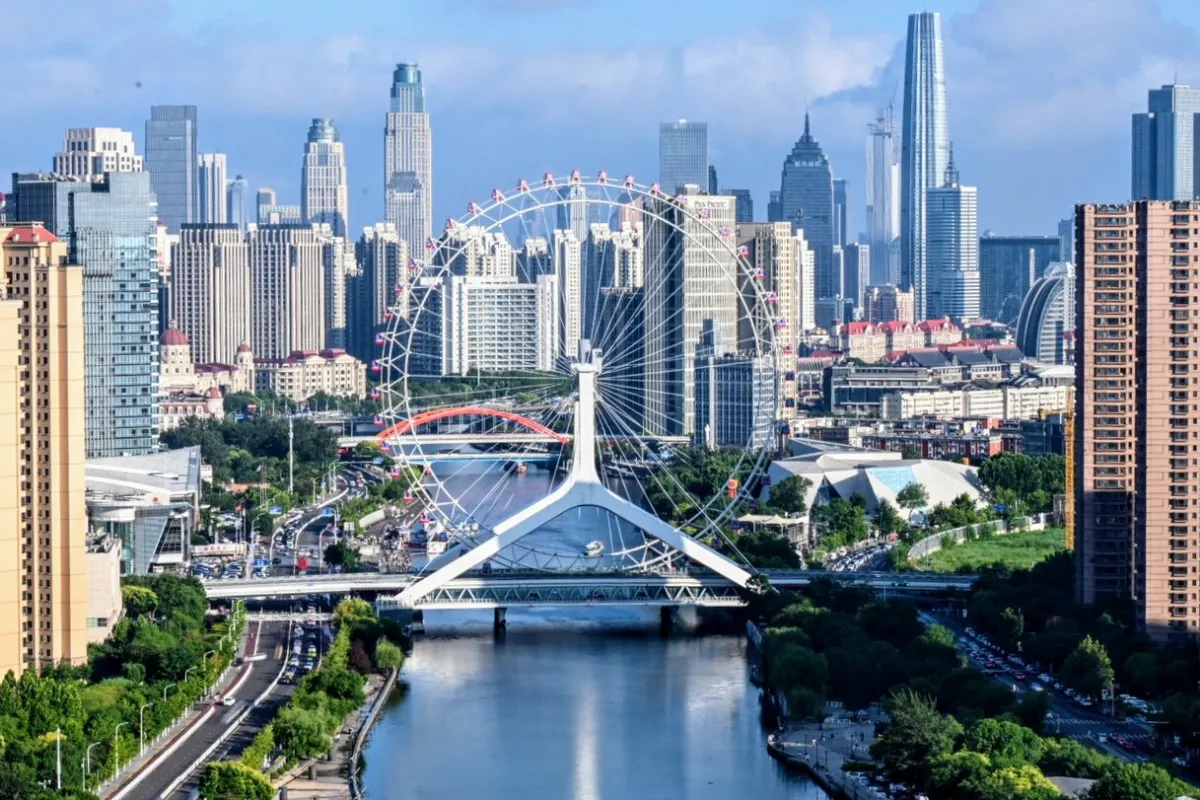
- Tianjin Eye, the ferris wheel built onto a bridge over the river
- Ancient Culture Street and the Confucian temple, for a Ming–Qing merchant-city layer
- The Porcelain House, a mansion clad entirely in glued-on china and cracked plates
- The Hai River cruises, which light up the colonial frontages after dark
What to eat
- Jianbing guozi the mung-bean crepe with fried dough, eaten standing up before 9am
- Goubuli baozi pork buns with a broth inside; the classic Tianjin breakfast item
- Mahua the long twisted fried dough, sold in every size including comically large
- Erduoyan zhagao fried rice cakes, a sweet street snack sold from blue-painted carts
How to plan
One full day is enough. Start at the Five Great Avenues in the morning, when the villas are lit sideways by the sun and the lanes are empty. Take a cab or the metro to the Italian Area for lunch by the river, then walk the promenade toward the Tianjin Eye. Spend the late afternoon in Ancient Culture Street for the temple and the stalls, and finish at the night-food row near the river, where jianbing and mahua compete for your last coins. An easy add-on is the Porcelain House before dinner.
Best time
April–May and September–October; winter wind off the plain is harsh
Practical tips
- Tianjin is 30 minutes from Beijing by high-speed rail — an easy day trip from the capital
- Breakfast stalls wind down by 9am; go early if you want the jianbing at its best
- The Hai River cruise is touristy but cheap, and the colonial frontages look best after sunset
This browser has no speech synthesis, so the ▶ buttons stay silent. Everything else works — Chrome, Edge and Safari can read the sounds aloud.