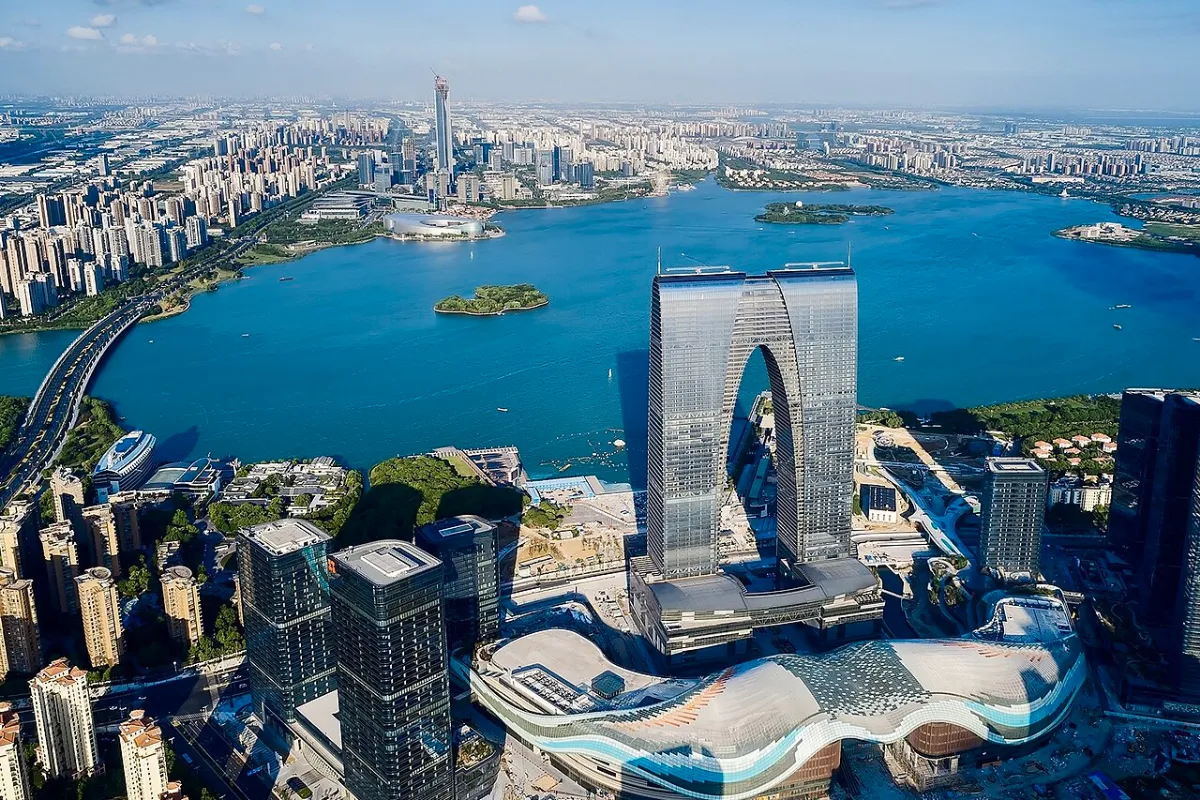
Why this place
Suzhou is the city that defined the Chinese classical garden: private scholars' gardens built as miniature worlds of water, rock and pavilion, and nine of them are now UNESCO-listed. It is also a canal city whose old streets still step down into the water, and the centre of China's silk industry for a thousand years. Its dialect is the softest of the Wu forms, and its opera shaped the regional stage, so the culture is as refined as the architecture.
People and culture
- Suzhou was the Song and Ming centre of the scholar-garden: private courtyards built as miniature worlds of water, rock and pavilion, and nine of them are now on the UNESCO list as a single entry.
- The city was China's silk capital for a thousand years, with imperial weaving bureaus whose workshops supplied the court and whose techniques still run in the Su embroidery schools.
- The Grand Canal made Suzhou rich as a grain and tax collection point, and its old streets still step down into the water at Pingjiang and Shantang.
- Suzhou dialect is the softest and most musical of the major Wu forms, and its opera and storytelling shaped the regional stage.
- The Humble Administrator's Garden was built by a dismissed official as a retirement landscape, which is why its name points at politics as much as plants.
What to see
- The Humble Administrator's Garden and the Lingering Garden the two essential gardens
- The Master of the Nets Garden, the smallest and the most perfectly composed
- Pingjiang Road and Shantang Street, canal lanes with stone bridges
- Tiger Hill and the leaning Yunyan Pagoda, which leans more than Pisa
- The Suzhou Museum, designed by I. M. Pei, next to the Humble Administrator's Garden
- Tongli and Zhouzhuang, canal towns within an hour, if you want the water-town version
What to eat
- Squirrel-shaped mandarin fish (songshu guiyu) sweet and sour, and deftly cut
- Suzhou-style noodles with a clear broth and toppings chosen from a list
- Sweet osmanthus cakes and glutinous-rice sweets
How to plan
Day one is the gardens: the Humble Administrator's Garden and the Lingering Garden in the morning, the Suzhou Museum at noon, and the Master of the Nets Garden late when it is quiet. Day two walks Pingjiang Road and Shantang Street on the canals, then Tiger Hill and its leaning pagoda. With a third day, take a morning bus to Tongli or Zhouzhuang water town. Suzhou is twenty-five minutes from Shanghai by rail, so you can stay there and day-trip in.
Best time
March–May and September–November; gardens are best in light rain, which is why they were built
Practical tips
- Gardens open early and are empty at 8am; by 10am the main ones are shoulder to shoulder, so start at the gate.
- Suzhou is twenty-five minutes from Shanghai and under an hour from Hangzhou by high-speed rail — keep one hotel and day-trip.
- The water towns (Tongli, Zhouzhuang) are cheaper and quieter on a weekday; the shuttle buses leave from the north bus station.
HSKHSK level 2HSK level 3HSK level 4
This browser has no speech synthesis, so the ▶ buttons stay silent. Everything else works — Chrome, Edge and Safari can read the sounds aloud.