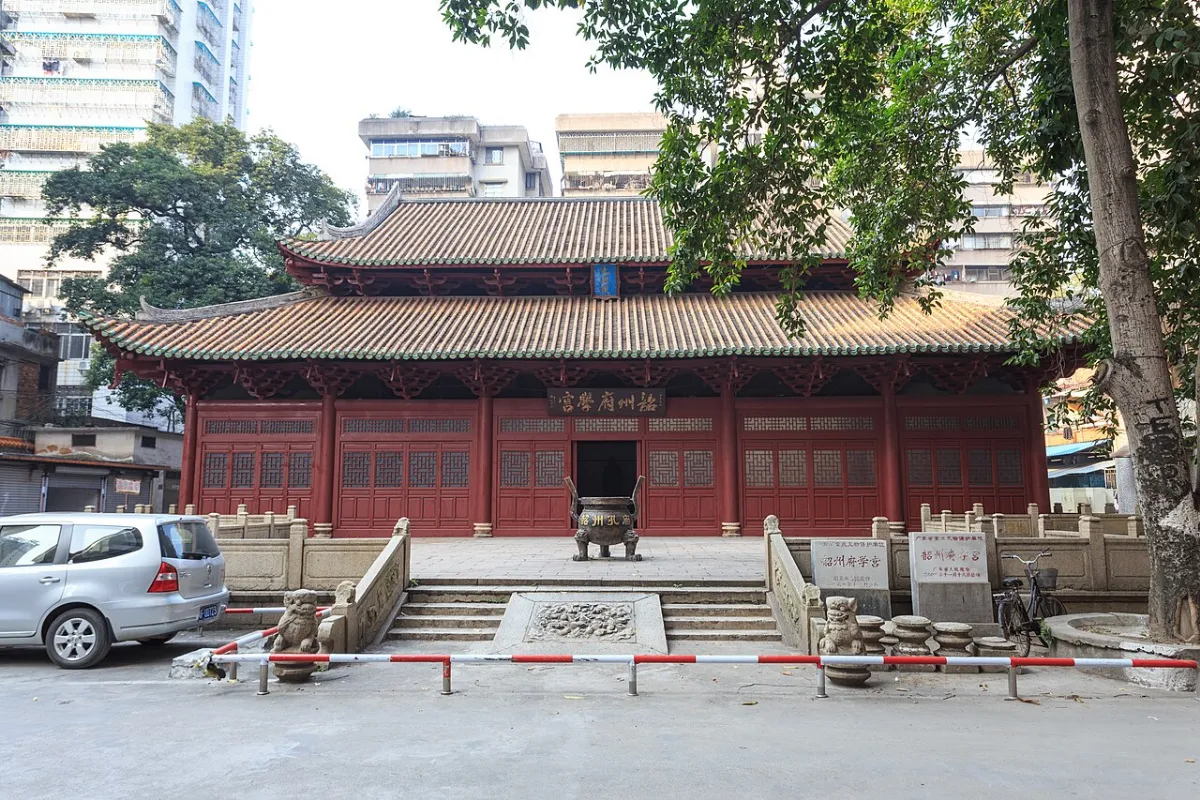
Why this place
Shaoguan is the main city of northern Guangdong, set where the Zhen and Wu rivers meet before becoming the Pearl. Just outside the city, Danxia Mountain gave its name to the global 'danxia' landform: red sandstone peaks and sheer cliffs that turn crimson at sunrise. The surrounding hills also hold a head Buddhist monastery and the old migration passes where Cantonese families trace their northern ancestors, making this the gateway to Guangdong's interior.
People and culture
- Danxia Mountain is the type locality for the danxia landform — red porous sandstone eroded into peaks, pillars and cliffs found across southern China but named here first.
- Nanhua Temple near the city is the head monastery of Chan Buddhism in China; the Sixth Patriarch Huineng taught and is entombed here, drawing pilgrims for over a thousand years.
- The Meiguan pass through the hills was the chief overland route linking Guangdong with the Yangtze heartland, used by migrating clans and salt caravans for centuries.
- Zhuji Lane is honoured as the point of origin for countless Cantonese lineages now living across the diaspora in Southeast Asia and the Americas.
What to see
- Danxia Mountain and the Yangyuan Stone, with red cliffs above the Jinjiang River and boat trips at the base.
- Nanhua Temple, the Chan Buddhist head monastery associated with the Sixth Patriarch.
- The Meiguan ancient road, the old pass with stone paving and a surviving gate tower.
- Zhuji Lane, the walled ancestral lane honoured by returned Cantonese clans.
- The Nanling National Forest Park, with waterfalls and the province's highest peaks inland.
- Shaoguan's riverside old town, where the Zhen and Wu rivers join.
What to eat
- Northern Guangdong cooking, often spicier and earthier than coastal Cantonese food.
- Nanxiong cured duck, a local preservation style eaten through the winter.
- Mountain vegetables and wild herbs foraged from the surrounding forests.
- Hakka-influenced dishes such as stuffed tofu, common in the northern counties.
How to plan
Plan two days. Day one take the bus to Danxia Mountain, walk the cliff path above the Jinjiang River and ride a boat through the red gorges, staying for the sunset glow on the rock. Day two visit Nanhua Temple in the morning, then the Meiguan pass and Zhuji Lane to follow the migration history, returning to Shaoguan for a northern-style dinner.
Best time
October–December and March–April; Danxia is hot and crowded in summer
Practical tips
- Danxia is crowded on holiday weekends — go on a weekday and start before noon for the best light.
- Buses to the scenic areas leave from Shaoguan's main station; a local guide helps at the temples.
- Summers are humid and mosquito-heavy in the hills; bring repellent and rain gear.
HSKHSK level 3
This browser has no speech synthesis, so the ▶ buttons stay silent. Everything else works — Chrome, Edge and Safari can read the sounds aloud.