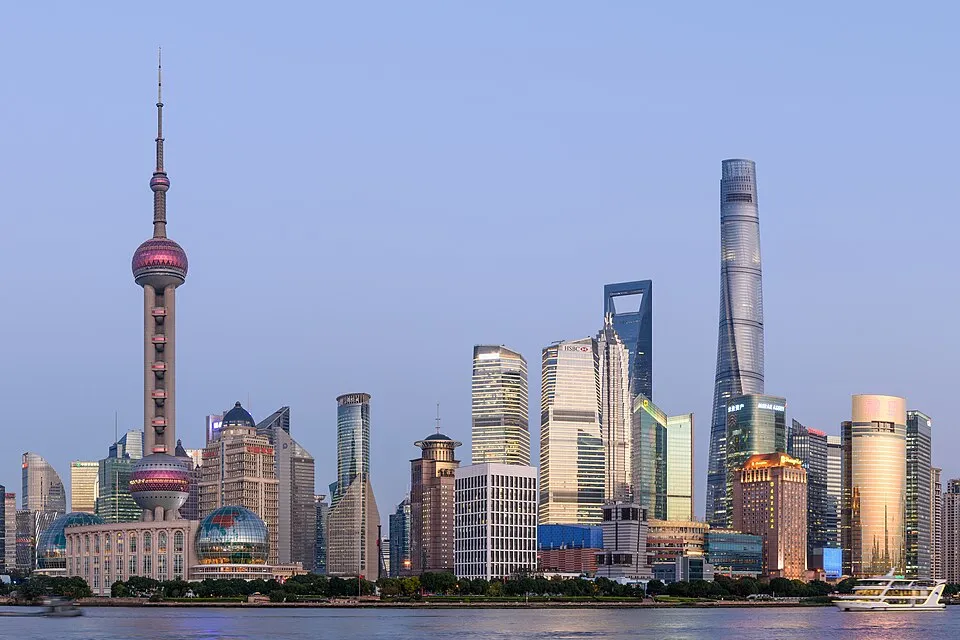
Why this place
Shanghai was a small fishing and cotton town until the 1840s, when it became a treaty port and grew into the most international city in Asia. The buildings of every phase are still standing: the Bund's foreign houses, the French Concession's lane neighbourhoods, and Pudong's towers across the river. The view from the water — old stone frontage against a wall of glass — is the single most photographed old-and-new contrast in the country. Away from the river it is a city of plane-tree streets, low lane houses and small neighbourhood restaurants that few visitors reach.
People and culture
- Shanghai's name first appears in Song-dynasty records as a creek-side market town on the Huangpu, which was dredged into a harbour only after the waterways were straightened in the Ming.
- The Bund was built between the 1860s and the 1930s by British, French and other foreign firms, in neo-classical and art-deco styles, and the row still reads as one foreign-made frontage facing the river.
- The former French Concession was run as a separate foreign district until 1943; its plane-tree grid and lane housing (longtang) is why the centre feels unlike the rest of the Chinese city.
- Pudong was farmland until 1990, when the state made it a development zone, and the Lujiazui cluster of towers rose in barely twenty years to become the symbol of the modern economy.
- The local food — sweet, oily and seafood-leaning — came with migrants from Jiangsu and Zhejiang who flooded in during the treaty-port boom, and that mix is the real Shanghai culture.
What to see
- The Bund at dawn and by night, looking across at the Lujiazui towers
- The former French Concession plane trees, 1920s villas, Wukang Road and the old lane houses (longtang)
- Yu Garden and the old town, for the Ming-dynasty merchant city underneath everything
- The Shanghai Museum, one of the best collections of Chinese bronzes, ceramics and painting
- Pudong's towers: the Shanghai Tower observation deck, the Jin Mao and the Oriental Pearl
What to eat
- Xiaolongbao soup dumplings, the city's signature; the queues are worth it
- Shengjianbao pan-fried pork buns with a crispy base, a breakfast institution
- Red-braised pork (hongshao rou) and Shanghai-style noodles with scallion oil
- Drinks in the French Concession's converted villas, which is its own Shanghai experience
How to plan
Spend day one on the Bund at dawn, then walk south into the old town and Yu Garden, and cross to Pudong by metro for the tower decks at dusk. Day two belongs to the former French Concession on foot — Wukang Road, the lane houses and the small museums — with the Shanghai Museum as a break. Day three is a half-day to a water town such as Zhujiajiao by metro, or a fast train to Suzhou, which is twenty-five minutes away, so you keep one hotel.
Best time
March–May and September–November; summer is hot and humid, winter damp and cold
Practical tips
- The metro is the easiest way around and reaches every district you are likely to want, including the airport and the train stations.
- Shanghai is twenty-five minutes from Suzhou and about forty-five from Hangzhou by high-speed rail, so build day trips in rather than changing hotels.
- The lane houses (longtang) are residential; look but do not walk into private courtyards, and keep voices down in the narrow alleys.
HSKHSK level 1HSK level 2HSK level 3
This browser has no speech synthesis, so the ▶ buttons stay silent. Everything else works — Chrome, Edge and Safari can read the sounds aloud.