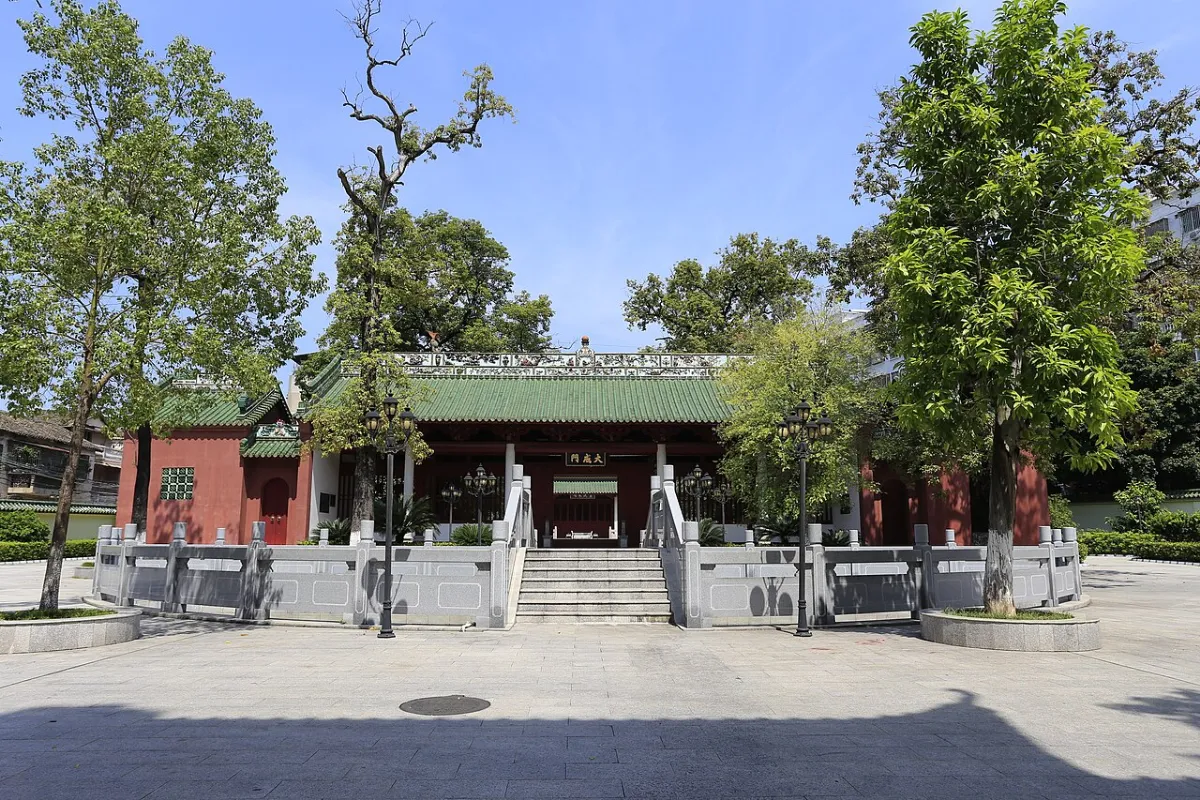
Why this place
Meizhou is the heartland of the Hakka people — the Han Chinese group who migrated south over centuries and kept their own language, architecture and customs. The walled round and square houses and the ancestral halls here are the classic Hakka forms, and the city is also the source of a distinctive Hakka cuisine now famous across Guangdong. Annual Hakka cultural festivals and large clan reunions still draw descendants from across the diaspora back to the Meizhou countryside, and the walled houses remain active family compounds rather than abandoned museum pieces.
People and culture
- Meizhou is regarded as the cultural capital of the Hakka, whose language and customs it helped preserve through centuries of southern migration.
- The Hakka walled houses (weiwu), round and square, are engineering feats built for defence and extended clan living.
- The Hakka Museum in Meixian documents the migration, the architecture and the food of the diaspora.
- Yingna Lake and the Lingguang Temple reflect the region's blend of Hakka folk belief and Buddhist practice.
- Hakka cuisine — salt-baked chicken, stuffed tofu and pounded-tea (lei cha) — is a Meizhou export to the rest of Guangdong.
What to see
- The Hakka round and square walled houses (weiwu) of the surrounding villages.
- The Hakka Museum and the ancestral halls in Meixian.
- Yingna Lake and the Lingguang Temple, with its 'spirited' pagoda.
- The old towns of Songkou and Dabu, on the river trade route.
- The tea terraces and the hills of the Meijiang valley.
- The Hakka earthen-building clusters open to visitors as living museums.
What to eat
- Hakka cuisine salt-baked chicken, stuffed tofu, and the lei cha (pounded tea) drink.
- Meizhou's preserved mustard greens and its rice wine.
- Hakka stuffed-bamboo-shoot and mountain-herb dishes.
- River fish from the Meijiang cooked simply with ginger and scallion.
How to plan
Give Meizhou two days. Day one tour the Hakka walled houses around the city and the Hakka Museum in Meixian, then a lei cha tasting. Day two follow the river to the old towns of Songkou and Dabu, visit Yingna Lake and Lingguang Temple, and finish with a Hakka banquet of salt-baked chicken and stuffed tofu. Save the final evening for a Hakka song performance if one is scheduled in the county cultural hall, and let the banquet of stuffed tofu and salt-baked chicken close the day on a local note.
Best time
October–December and March–April
Practical tips
- The walled houses are spread out — hire a car or join a village tour.
- Lei cha is an acquired taste; try it as a snack, not a meal.
- Hakka villages are working communities — ask before entering private halls.
This browser has no speech synthesis, so the ▶ buttons stay silent. Everything else works — Chrome, Edge and Safari can read the sounds aloud.