Why this place
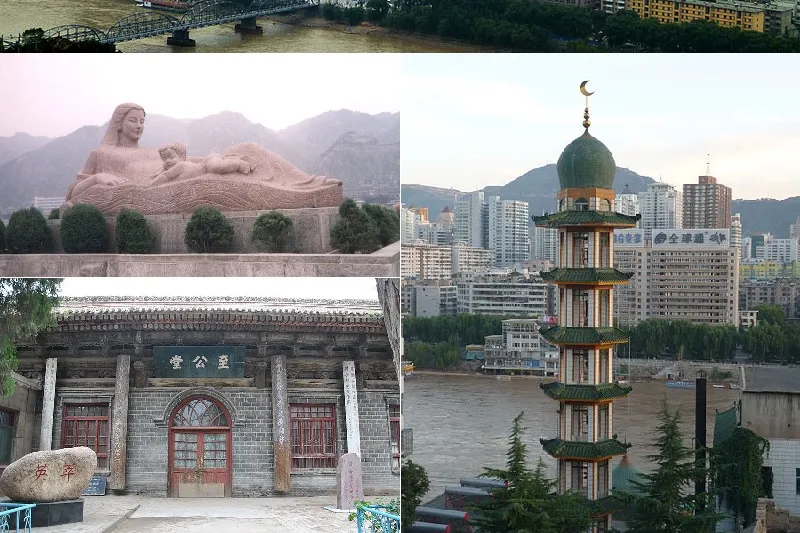
Lanzhou lies in a narrow valley where the Yellow River runs straight through the city, and it is often called the geographic centre of China, roughly halfway between the coast and the far west. It is famous across the country for its beef noodles, eaten at breakfast in every corner lane, and it is the practical gateway to the Hexi Corridor, the Silk Road's desert stretch, and to the Tibetan plateau to the south. The Zhongshan Bridge, the first permanent crossing of the Yellow River, still stands, and the Gansu museum holds the Flying Horse, the province's best-known bronze.
People and culture
- Lanzhou beef noodles, pulled by hand into a chosen width and served in clear beef broth with chilli oil and radish, are a breakfast ritual across Gansu and a craft learned over years by the city's pullers.
- The city is the rail and road hub of the northwest, the point where the Silk Road leaves the Loess Plateau and enters the Hexi Corridor toward Dunhuang and the Xinjiang border.
- The Gansu Provincial Museum holds the Flying Horse of Gansu, a Han bronze of a horse mid-gallop with one hoof on a swallow, adopted as a national symbol of Chinese travel.
- Lanzhou's position on the Yellow River made it a crossing and a market for Tibetan, Muslim and Han peoples, and its riverside lanes still mix these cultures in food and dress.
What to see
- The Yellow River waterfront, with the Zhongshan Bridge, the first iron bridge over the river built in 1907, and the old waterwheels.
- The Gansu Provincial Museum, with the Flying Horse of Gansu and the Silk Road and Tibetan exhibits.
- The White Pagoda Mountain, with a Ming pagoda and a view over the river valley and the city.
- The Bingling Temple caves, reached by boat from the Liujiaxia reservoir, with carved Buddhas in a cliff.
- The Yellow River Mother sculpture and the riverside parks where locals walk and dance in the evening.
- The Xiguan mosque and the Muslim quarter, the centre of the city's Hui food and craft.
What to eat
- Lanzhou beef noodles, niurou mian, springy hand-pulled noodles in a clear beef broth with chilli oil and a slice of radish, the city's breakfast staple.
- Hui Muslim lamb skewers grilled over charcoal with cumin and chilli, sold in the riverside night market.
- Fermented rice drink and huiguo sweet pastries, a local dessert pair from the Muslim quarter.
- Gansu home dishes of stir-fried potato, green pepper and wide belt noodles called rubing, eaten at lunch.
How to plan
Day 1: walk the Yellow River waterfront and the Zhongshan Bridge, then visit the Gansu Provincial Museum for the Flying Horse and the Silk Road exhibits. Day 2: climb White Pagoda Mountain for the view, explore the Xiguan mosque and Muslim quarter for food, and take an evening riverside walk. From Lanzhou the Hexi Corridor rail line runs west, and a road turns south to Xiahe and Tibet, so use the city as a two-day base before heading out.
Best time
May-October
Practical tips
- Lanzhou is the rail hub for the Silk Road, and most westward journeys start here, so book the corridor trains early in summer.
- The beef noodle breakfast peaks before 9am, so go early for the best broth and the freshest pulled noodles.
- The Bingling Temple caves need a boat from Liujiaxia, so plan a full half-day and check the water level by season.
This browser has no speech synthesis, so the ▶ buttons stay silent. Everything else works — Chrome, Edge and Safari can read the sounds aloud.