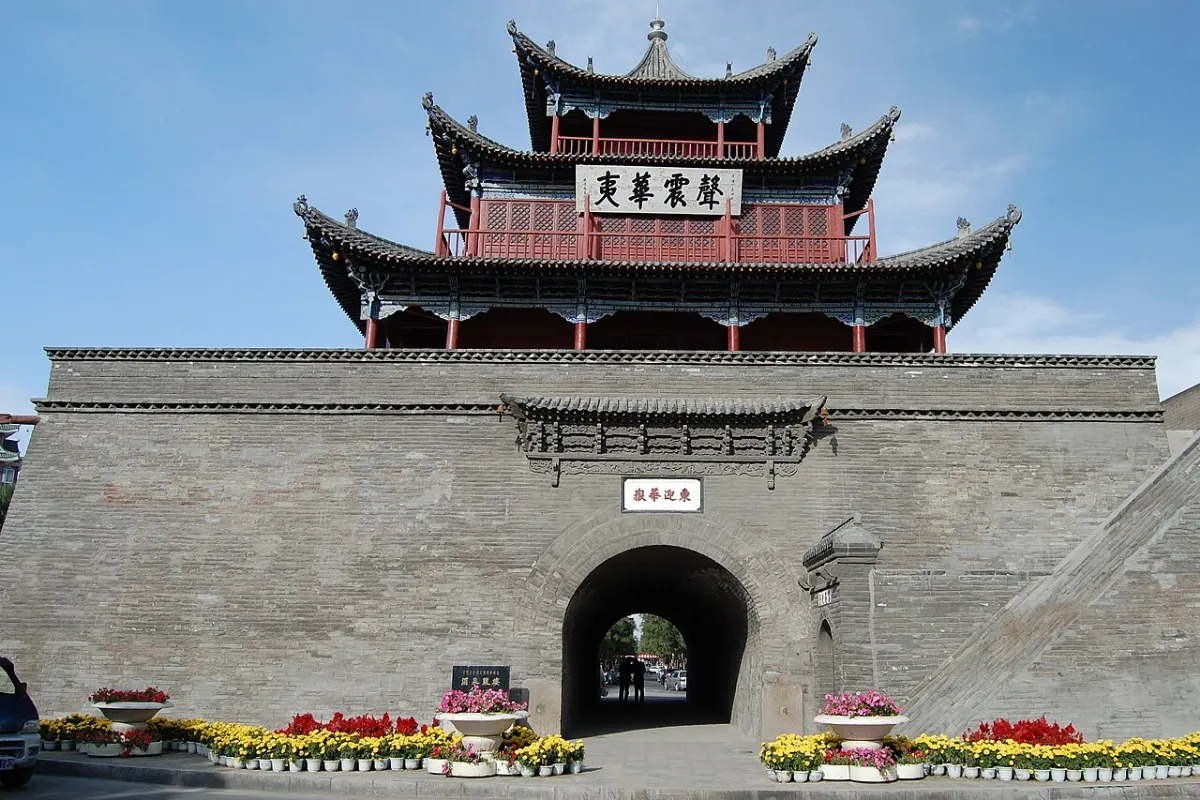
Why this place
Jiuquan is the oasis city at the western end of the Hexi Corridor, the base for Dunhuang and for the Jiuquan Satellite Launch Centre. Its name means wine spring, from a Han legend of a spring whose water tasted like wine, and the oases around it grow wine grapes and fruit. To the west lie the Han-dynasty Yumen and Yumenguan gates, the desert ports of the old Silk Road, and the road continues to the Mogao Caves at Dunhuang.
People and culture
- Jiuquan's name comes from a Han tale of a spring whose water tasted like wine, and the city remains a centre of Gansu wine, with vineyards on the corridor oases.
- The Yumen and Yumenguan passes west of the city were the Han dynasty's desert gates, the last outposts of the empire before the Taklamakan crossing.
- The Jiuquan Satellite Launch Centre, built in the 1950s, is one of China's main spaceports and has launched crewed and lunar missions.
- As the western corridor hub, Jiuquan fed and supplied the Silk Road traffic and the garrison line that held the desert edge for two thousand years.
What to see
- The Jiuquan park and the wine-spring legend, with the city's museums on the corridor.
- The Yumen Pass and Yumenguan, the Han-dynasty frontier gates in the desert west.
- The Jiuquan Satellite Launch Centre, visitable on organised tours from the city.
- The Qianfodong caves at Dunhuang, two to three hours west by road.
- The corridor oasis vineyards and the local wine cellars open to visitors.
- The desert ruins and beacon towers running west toward the Taklamakan.
What to eat
- Jiuquan lamb skewers and the night-market grills, a corridor favourite.
- Local wine from the oasis vineyards, a large share of Gansu's wine grapes.
- Hand-pulled noodles and roujiamo, the northwest staples in the city's lanes.
- Hui Muslim clay-oven flatbreads and dried fruit from the market.
How to plan
Day 1: walk the Jiuquan park and the wine-spring sites, then tour a local vineyard for the oasis wine. Day 2: take a tour to the Yumen and Yumenguan desert gates, or join an organised visit to the Satellite Launch Centre, and continue west to Dunhuang's Mogao Caves. Jiuquan is the rail and road hub for the far western corridor, so it works as a one- or two-day base before Dunhuang.
Best time
May-October
Practical tips
- Jiuquan is the gateway to Dunhuang, so combine the two, because the Mogao Caves are a few hours west by road or rail.
- The Satellite Launch Centre requires an organised tour and ID checks, so book ahead and carry your passport.
- The Yumen and Yumenguan gates are deep in the desert, so go with a driver or tour and carry plenty of water.
HSKHSK level 3
This browser has no speech synthesis, so the ▶ buttons stay silent. Everything else works — Chrome, Edge and Safari can read the sounds aloud.