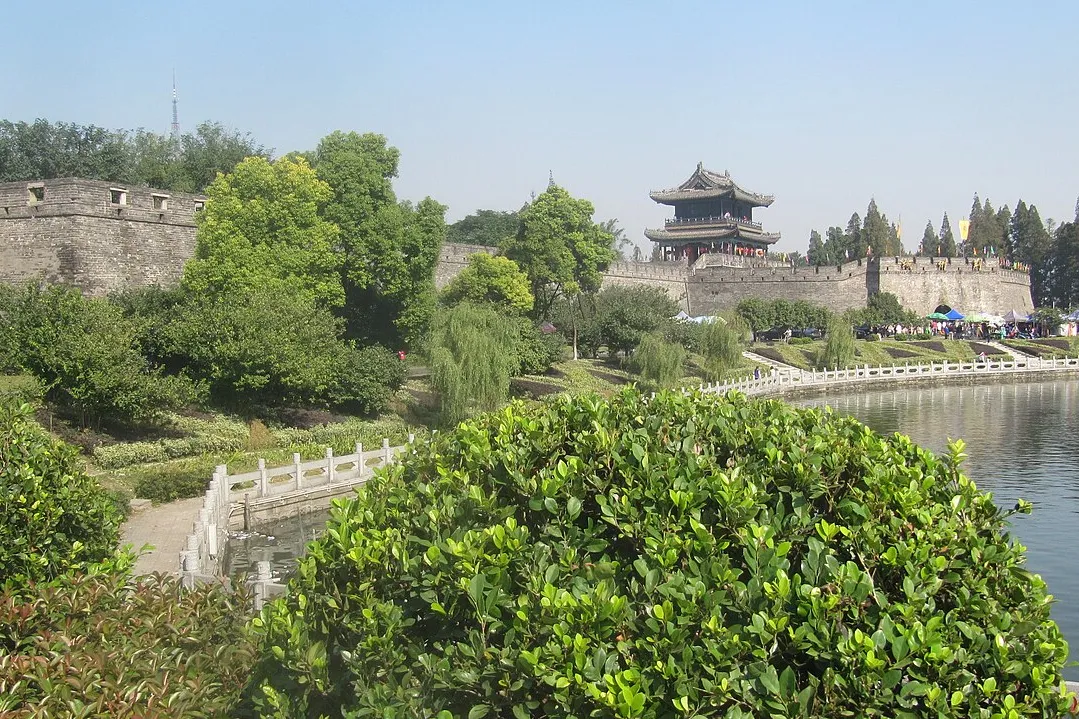
Why this place
Jingzhou was the capital of the State of Chu and then a major city of the Three Kingdoms, and it has one of the best-preserved Ming city walls in China - 11km around, with the moat still full. The Chu culture that produced China's earliest surviving poetry came from this region. The city guarded the middle Yangtze grain road, which is why every dynasty kept a garrison here.
People and culture
- Jingzhou was the capital of the State of Chu and a Three Kingdoms flashpoint, and its Ming wall is one of the best preserved in China, about 11km round with a full moat.
- The Chu capital at Jinancheng was the largest pre-Qin city site in China, the seat of a kingdom famed for poetry, lacquer and bronze.
- Guan Yu, the Shu general, is tied to Jingzhou in the romance; his temple here is a major shrine to the god of loyalty.
- The Jingzhou Museum holds the finest Chu and Han textiles and lacquerware in China, from tombs that escaped looting.
- The city guarded the middle Yangtze grain road, which is why every dynasty kept a garrison here.
What to see
- The Ming city wall - walk the full circuit, and see the three surviving original gates.
- The Jingzhou Museum, which holds the finest collection of Chu and Han textiles and lacquerware in China.
- The Chu capital ruins at Jinancheng, the largest pre-Qin city site in China.
- Guan Yu's temple, since Jingzhou was central to his story.
- The Jingzhou museum's horse-and-chariot pit, with Warring States bronzes.
- The Yangtze riverfront and the old wharf district.
What to eat
- Hubei freshwater fish - Jingzhou fish dishes are a local point of pride.
- The local fish cake and lotus-root cooking, plus rice wine.
- Fish cake (yu gao), the local steamed fish and pork loaf.
- Lotus-root cooking and the local rice wine.
How to plan
Two days. Day 1: walk the full Ming wall circuit and the moat, then the Jingzhou Museum for the Chu lacquer and textiles. Day 2: the Jinancheng Chu capital ruins and Guan Yu's temple, ending on the Yangtze riverfront. Jingzhou is about an hour and a half by high-speed rail from Wuhan and sits on the line toward Zhangjiajie, so it fits a Hubei-Hunan route with an overnight in the city.
Best time
March-May and October-November
Practical tips
- The museum is the reason to come - the silk and lacquer from Chu tombs is genuinely astonishing; allow a full morning.
- The Ming wall is walkable all round; do it on the ramparts at dusk for the moat light.
- Jingzhou is a rail stop between Wuhan and the west; use it as a base, not just a pass-through.
This browser has no speech synthesis, so the ▶ buttons stay silent. Everything else works — Chrome, Edge and Safari can read the sounds aloud.