Why this place
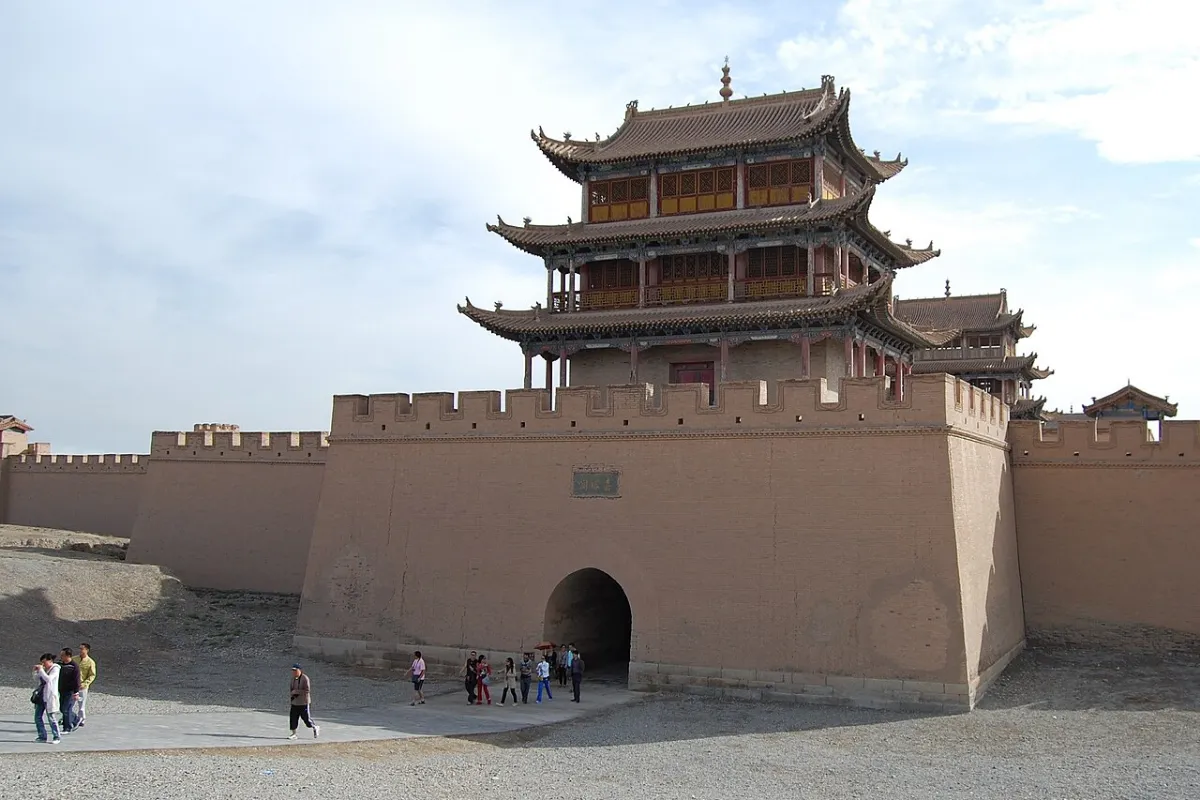
Jiayuguan stands where the Ming Great Wall reaches its western end, a fortress alone in the Gobi with the Qilian snow mountains behind and the desert in front. Built in the fourteenth century as the First and Greatest Pass Under Heaven, it was the last gate of the empire on the Silk Road, where travellers cleared customs before the dangerous desert crossing. The Overhanging Wall climbs a ridge above the fort, and the Wei-Jin tombs north of the city hold painted brick murals of daily life from a thousand years ago.
People and culture
- The Jiayuguan fort was the western customs post of the Ming, where merchants and envoys were registered before entering or leaving the empire across the desert.
- The Overhanging Wall is a section of the Ming wall built up a steep slope, its name from the way it appears to hang above the gorge.
- The Wei-Jin tombs north of the city contain more than a thousand brick-chamber graves, many with lively murals of farming, hunting and music from the third to fifth century.
- Jiayuguan marks the edge of the Hexi Corridor, the narrow green ribbon between the Qilian range and the desert that carried the Silk Road and every army moving west.
What to see
- The Jiayuguan fortress, the First and Greatest Pass Under Heaven, the western end of the Ming wall.
- The Overhanging Wall, a steep Ming wall section climbing the ridge above the fort.
- The Wei-Jin tomb murals, in the desert north of the city, with painted brick chambers.
- The Qilian Mountains to the south, snow-covered most of the year, with a glacier road in summer.
- The Great Wall museum, explaining the wall's construction and the pass's role on the Silk Road.
- The Shiguanxia gorge and the ruined wall stretches running into the desert.
What to eat
- Gansu northwest cooking of lamb, noodles and the local jiachang home dishes.
- Jiayuguan braised lamb and the region's dried fruit, eaten as snacks on the corridor road.
- Hand-pulled noodles with a meat sauce, a staple in the fort town's lanes.
- Hui Muslim skewers and the local flatbreads baked in clay ovens.
How to plan
Day 1: enter the Jiayuguan fortress in the morning, walk the ramparts and the museum, then climb the Overhanging Wall for the view over the Gobi. Day 2: take a taxi to the Wei-Jin tombs north of the city for the painted bricks, and in the afternoon look across to the Qilian snow line. Jiayuguan sits on the rail line between Lanzhou and Dunhuang, so pair it with the Mogao Caves as a two-day corridor stop.
Best time
May-October
Practical tips
- Jiayuguan pairs naturally with Dunhuang's Mogao Caves, both on the same rail line, so do them as one trip rather than returning to Lanzhou.
- The fort and the Overhanging Wall are exposed and windy, so bring a hat and water and avoid the midday sun in summer.
- The Wei-Jin tombs are 20km north and need a taxi or tour, and the painted chambers are fragile, so photography may be restricted.
HSKHSK level 3
This browser has no speech synthesis, so the ▶ buttons stay silent. Everything else works — Chrome, Edge and Safari can read the sounds aloud.