Why this place
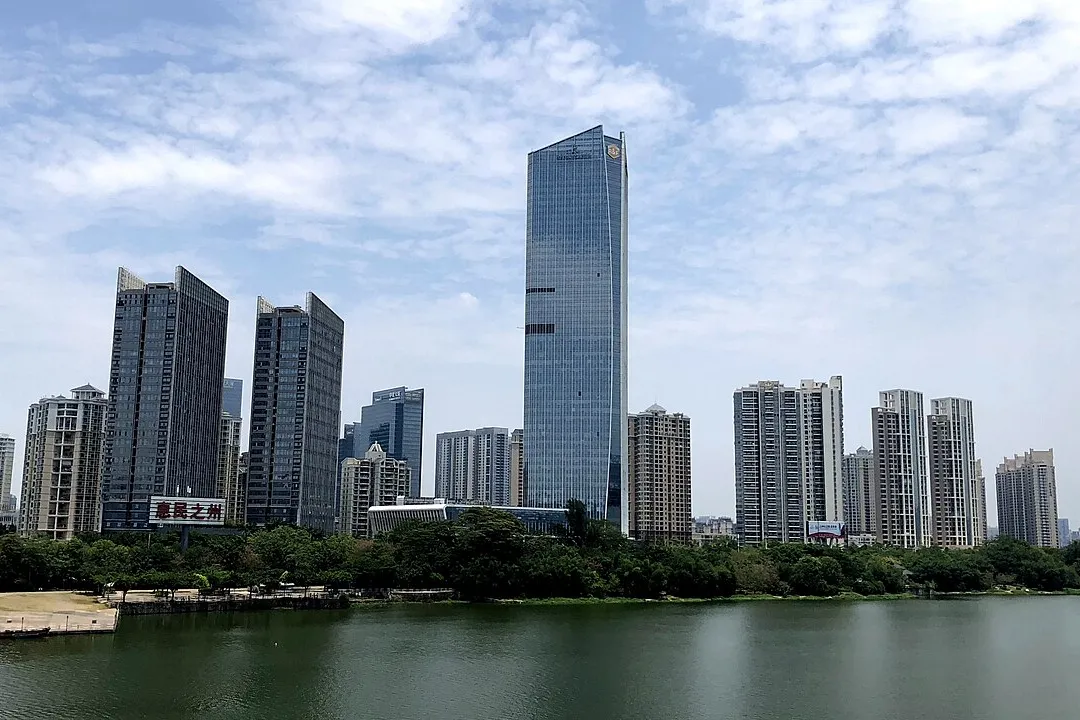
Huizhou is where the Song poet Su Dongpo was exiled in the eleventh century, and he liked it so much he wrote about staying permanently — the lake and the hills he wrote about are still the centre of the city. Today Huizhou is also a major electronics manufacturing base on the edge of the Pearl River delta, with hot springs in the hills behind it. The combination of a celebrated literary exile, sacred Taoist mountains and a modern electronics industry gives Huizhou an unusual layering of old scholar culture, religious landscape and new industrial energy within a single compact region.
People and culture
- The Song-dynasty poet Su Dongpo was exiled to Huizhou and wrote poems praising its West Lake, linking the city to China's literary canon.
- Luofu Mountain is a sacred Taoist peak with temples and hot springs honoured for more than a millennium.
- Huizhou's Hakka villages preserve walled houses and the Hakka dialect in the surrounding hills.
- The city became a 20th-century electronics manufacturing hub, supplying global supply chains.
- Local preserved-mustard pork (meicai kourou) is a Huizhou dish carried into Cantonese home cooking.
What to see
- West Lake (Huizhou's own) and the Su Dongpo memorial in the city centre.
- Luofu Mountain, a Taoist mountain with hot springs and a long temple tradition.
- The Nankun Mountain and the hot springs of Longmen county.
- The old county towns and Hakka villages of the surrounding hills.
- The Xunliao Bay coast, a beach area developed east of the city.
- The Honghua Lake reservoir and the delta-edge parks.
What to eat
- Hakka and Cantonese mix salt-baked chicken, stuffed tofu and river fish.
- Huizhou's meicai kourou pork braised with preserved mustard greens.
- Longmen hot-spring-area farm food, heavy on mountain herbs.
- West Lake lotus-root and freshwater snacks sold near the lake.
How to plan
Plan two days. Day one explore West Lake and the Su Dongpo memorial, then climb part of Luofu Mountain for the temples and hot springs. Day two drive to the Nankun Mountain hot springs or the Xunliao coast for the beach, returning via a Hakka-style dinner of salt-baked chicken and stuffed tofu. An evening stroll along West Lake after dinner shows exactly why the exiled poet chose to remain here rather than move on, and the lit pagodas make the classical reference tangible.
Best time
October–December and March–April
Practical tips
- Luofu and Nankun get crowded on weekends; the hot springs need advance booking.
- The Xunliao coast is a long drive east — start early or stay overnight.
- Su Dongpo sites are modest; pair them with the lake walk rather than a long haul.
HSKHSK level 3
This browser has no speech synthesis, so the ▶ buttons stay silent. Everything else works — Chrome, Edge and Safari can read the sounds aloud.