Why this place
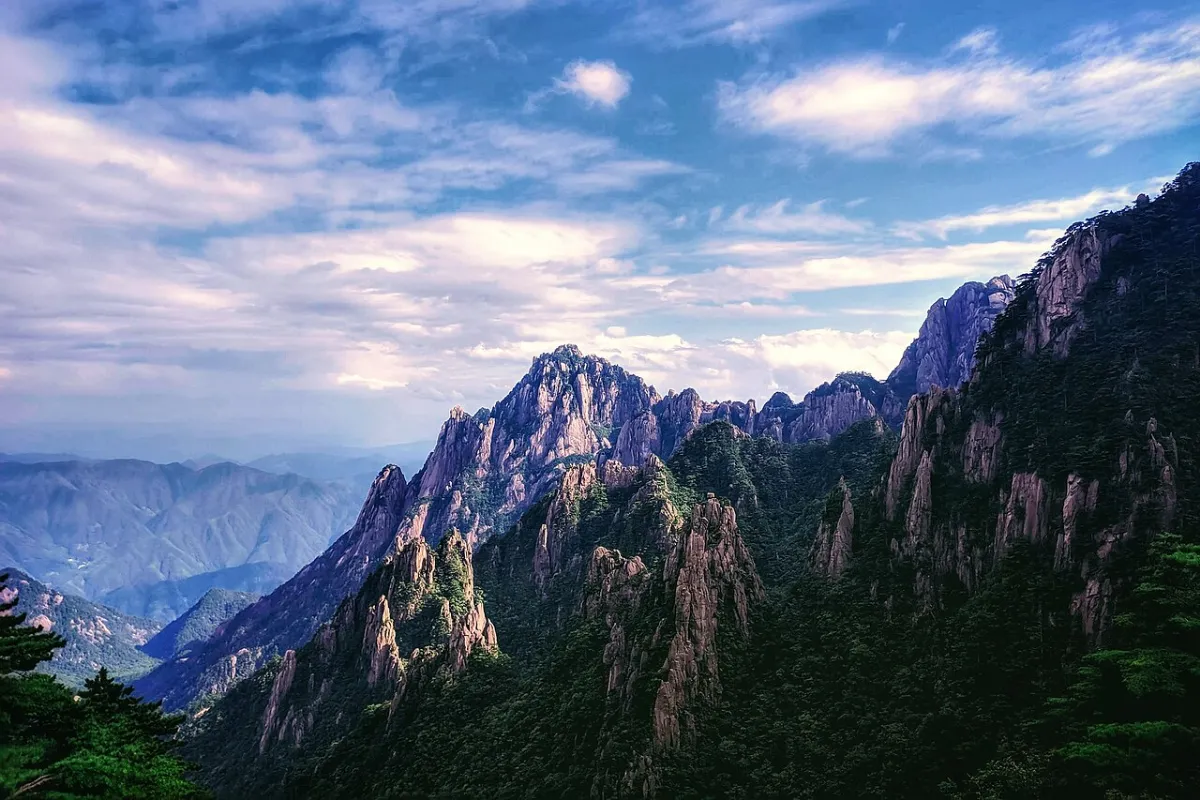
Huangshan is the mountain that Chinese landscape painting has been depicting for a thousand years: granite peaks rising out of cloud, twisted pines growing from bare rock, hot springs and a sea of mist in the early morning. Its three main summits — Lotus, Bright Summit and Celestial Capital — all top 1,800 metres, and the spires weather into the shapes that painters copied. It is a UNESCO site and it is as good as its reputation, but it is also the gateway to the Huizhou villages that complete the picture.
People and culture
- This is Huizhou, the region whose merchants paid for the architecture everyone photographs: whitewashed walls, black tile roofs, horse-head gables, and a carved stone gate in front of every house.
- Two of its villages, Hongcun and Xidi, are on the UNESCO list — not as ruins but as working villages whose houses and ponds were laid out together with the water supply.
- The three Huizhou carvings — brick, wood and stone — are the local specialism, and the archway group at Tangyue is the largest surviving set of memorial arches in the country.
- Huizhou was also a book culture: its inksticks and She inkstones come from here, and its academies trained much of the late-imperial civil service.
- Huiju, the local opera, is where Beijing opera companies borrowed their music from — the national opera has a Huizhou accent in its DNA.
- The mountain's three main peaks — Lotus, Bright Summit and Celestial Capital — are all over 1,800 metres, and the granite spires weather into the shapes that painters copied for a thousand years.
What to see
- The summit sunrise from Guangmingding or Lion Peak the reason to stay overnight on the mountain
- The Beginning-to-Believe Peak and the flying-over rocks in the West Sea canyon
- The old villages of Hongcun and Xidi UNESCO-listed Huizhou villages with white walls and horse-head gables
- Tunxi old street in Huangshan city, the Huizhou merchant quarter
- The Yuping cable car up and the Lotus Peak ridge, for the classic view of the granite spires
- The hot springs at the foot of the mountain, where the climb traditionally ends
What to eat
- Huizhou cuisine one of China's eight great cuisines; try the stinky mandarin fish (chou guiyu)
- Bamboo shoots, wild herbs and the local tofu
- The river fish of the Xin'an, simply steamed, from the villages below
- Huizhou fermented tofu and the winter-melon soup
How to plan
Two nights is the rhythm: ride the cable car up on day one and walk the West Sea canyon and the Beginning-to-Believe Peak, sleeping on the mountain. Day two is for the sunrise from Guangmingding and the descent to Tangyue for the archway group, then Hongcun or Xidi for the evening. A third day walks the Huizhou villages and Tunxi old street. The mountain is busiest in October for the autumn colour; May or November gives clearer air and fewer crowds.
Best time
April–May and October–November; winter is beautiful with snow and far fewer people
Practical tips
- The mountain is a hard walk with thousands of steps — the cable car saves the worst of it but not all
- Overnight on the mountain is expensive and must be booked ahead; the sunrise is worth it
- The summit hotels sell out in the autumn colour season (October–November); book weeks ahead, or day-trip the mountain from Tunxi instead.
HSKHSK level 2HSK level 3HSK level 4
This browser has no speech synthesis, so the ▶ buttons stay silent. Everything else works — Chrome, Edge and Safari can read the sounds aloud.