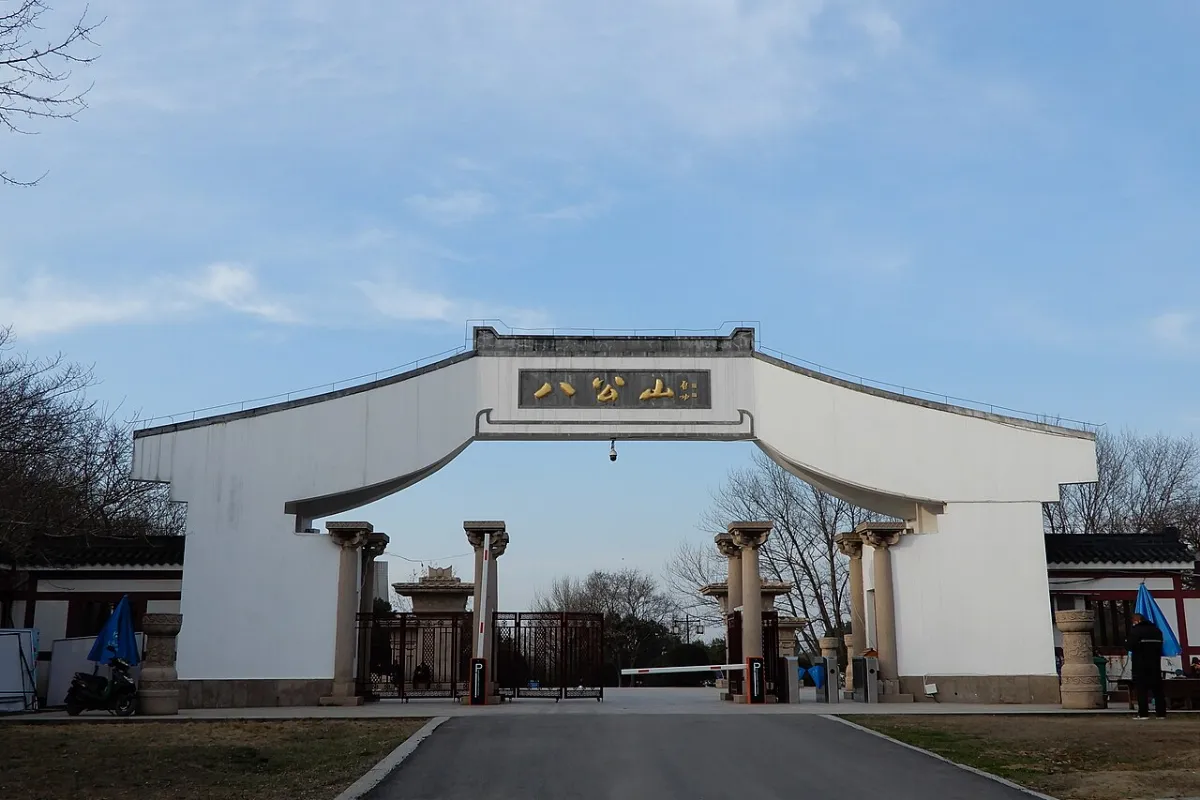
Why this place
Huainan holds three separate pieces of Chinese memory, and they sit within 40 km of each other. Bagong Mountain is where the Jin broke the Former Qin army at the Feishui river in 383 AD — the battle that kept south China separate for another two centuries, and the source of two everyday idioms. Shou County, half an hour south, was the last capital of the state of Chu and still has a complete walled circuit and one of the oldest working reservoirs in the country. And this is where tofu is said to have been invented.
People and culture
- Tofu is credited to Liu An, Prince of Huainan and grandson of the founding Han emperor, who was experimenting with alchemy at Bagong Mountain around 160 BC. The claim is local but old, and the city has built a festival and a whole cuisine on it.
- Shouchun (today's Shou County) was the last capital of Chu after Qin's armies pushed the state east in 241 BC — which is why Anhui's museums hold so much Chu bronze, and why Anhui is still called 'Chu country'.
- The Feishui campaign of 383 AD was fought here: a smaller Jin force routed the Former Qin army, and two everyday idioms came out of it — 'grass and trees all look like soldiers' and 'the wind and the crane's cry'.
- Huagudeng, the flower-drum lantern dance of Fengtai county, is on the national intangible heritage list — loud and comic, performed at Lunar New Year and the Lantern Festival rather than on a stage.
What to see
- Bagong Mountain the tofu workshops, the tomb attributed to Liu An, and the Feishui battlefield where a smaller army routed a larger one
- The city wall of Shou County, 30 km south a complete circuit you can walk, with a moat on all four sides
- Anfeng Tang an irrigation lake dug in the 6th century BC and still in use, with a Song-dynasty sluice gate
- The Chu galleries in the Shou County museum bronzes from Shouchun, the Chu capital
- Jiaogang Lake wetland, for birds and lotus, if you have a spare half-day
What to eat
- Beef soup (niurou tang) bone broth with bean noodles and chilli oil, with flatbread, eaten at breakfast
- Bagongshan tofu in a dozen forms: braised, fried, fermented 'hairy' cubes, and as tofu skin
- Shouxian 'Dajiujia' pastry flaky and lard-layered, named after a Song emperor who was fed it while fleeing
How to plan
Two days: Bagong Mountain in the morning after a beef-soup breakfast; Shou County on day two for the wall, the museum and the tomb of Liu An; add Anfeng Tang on the way back if you have a car.
Best time
April–May and September–October; the tofu festival is in September
Practical tips
- Shou County is a separate town 30 km south — buses and slow trains run all day but stop early in the evening, so do not plan to return after 7pm
- The tofu banquet has to be ordered in advance, usually for a group of four or more
- The flower-drum lantern troupes perform at Chinese New Year and the Lantern Festival, not year-round
This browser has no speech synthesis, so the ▶ buttons stay silent. Everything else works — Chrome, Edge and Safari can read the sounds aloud.