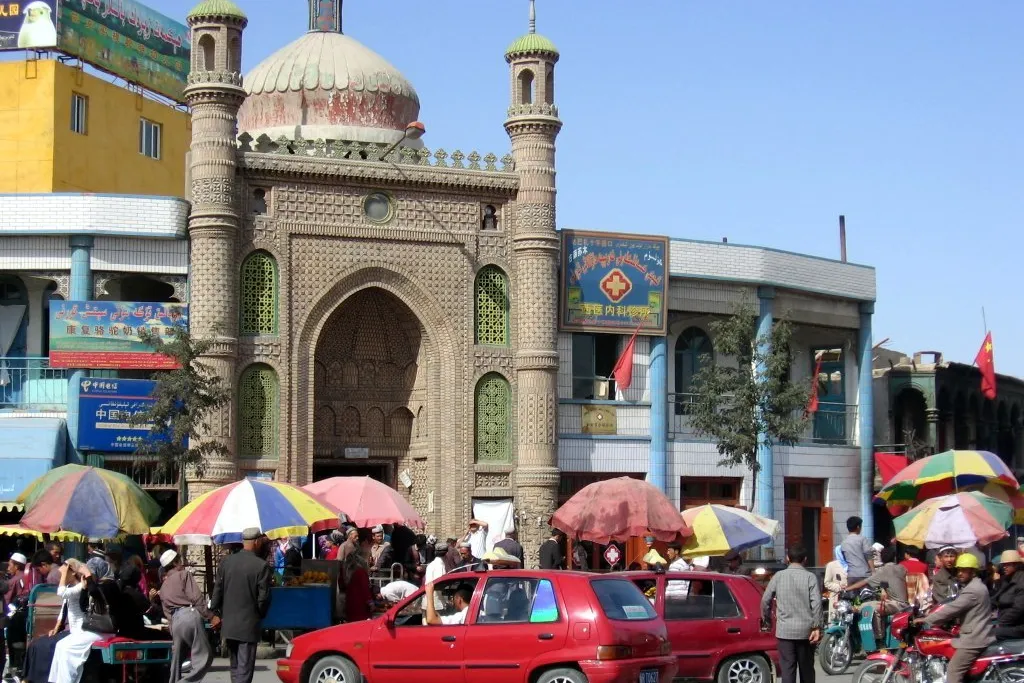
Why this place
Hotan is an oasis on the southern Silk Road, and it has been famous for two things for two thousand years, white jade, washed out of the Karakash and Yurungkash rivers, and silk, which is still reeled and woven here using old methods. The mummies found nearby are among the most surprising in archaeology. The city is also a centre of Uyghur craft, with carpet and atlas silk workshops and a Sunday market famed for its jade and fruit.
People and culture
- Hotan's white jade, washed from the Karakash and Yurungkash rivers, has been prized for two thousand years and is still panned by locals in the dry season.
- The city keeps a living silk tradition, with workshops that reel the cocoons and weave atlas silk using methods passed down for generations.
- The Hotan carpets and the atlas-patterned silk are Uyghur crafts sold across Xinjiang, with bold colour and geometric design.
- The desert around Hotan held the kingdoms of the southern Silk Road, and the mummies found here show the region's deep and mixed past.
What to see
- The jade rivers, where people still wade looking for white jade, and the jade market.
- The Hotan silk workshops, with the old reeling and weaving methods.
- The Hotan carpet and atlas silk factories, and the Sunday market.
- The Damagou and Sampul sites, and the local museum with its mummies.
- The Karakash and Yurungkash river confluence and the desert scenery.
- The old town lanes and the Uyghur mosque architecture of the oasis.
What to eat
- Hotan walnuts, dates and pomegranates, among the best in Xinjiang.
- Uyghur pilaf and lamb, and the local naan varieties are among the best in Xinjiang.
- Hand-pulled laghman noodles and the clay-oven bread.
- Hui and Tajik dairy from the mountain edge, with milk tea.
How to plan
Day 1: visit the jade market and the rivers where locals pan for stone, then the silk and carpet workshops. Day 2: explore the old town and the Sunday market, or the Damagou sites and the museum with its mummies. Hotan is the end of the southern Silk Road, so reach it from Kashgar by the desert road or fly in, and use it as a one- or two-day craft stop.
Best time
April-June and September-October
Practical tips
- Real Hotan jade is rare and widely faked, so buy from the licensed market and learn the basics before spending.
- The city is the southern Silk Road terminus, so pair it with Kashgar rather than approaching from the north.
- Hotan is hot and dry, with sand carried from the desert, so bring water and eye cover in spring.
HSKHSK level 4
This browser has no speech synthesis, so the ▶ buttons stay silent. Everything else works — Chrome, Edge and Safari can read the sounds aloud.