Why this place
Handan was the capital of the State of Zhao in the Warring States period, more than 2,300 years ago, and a surprising number of Chinese idioms come from stories set here. It is one of the very few Chinese cities whose name has never changed in three thousand years, which gives it a strange continuity: markets, temples and a dialect all sit on top of a capital that was already old when Rome was young.
People and culture
- Handan was the Zhao capital in the Warring States era, and phrases still used today — 'learning to walk at Handan', meaning to copy clumsily — come straight from stories set in this city.
- The King Wuling of Zhao reformed his army here, dressing cavalry in steppe clothes and turning the state into a military power, a change recorded in the terrace where he drilled his troops.
- The Cishan culture, found in the hills nearby, left evidence of millet farming and pottery more than seven thousand years old, some of the earliest in the Yellow River basin.
- Handan is a centre of Taiji (Taichi) boxing; the slow, circular form practised worldwide traces one of its main lineages to the masters who taught here.
What to see
- Zhao Wang Cheng, the earthen ramparts of the Zhao capital, still visible in the city
- Congtai Park, the terrace where King Wuling of Zhao reviewed his troops
- Xiangtangshan Grottoes nearby sixth-century Buddhist cave carvings with a distinct style
- The Wahuang Gong cliff temple, built against a mountain face with hanging galleries
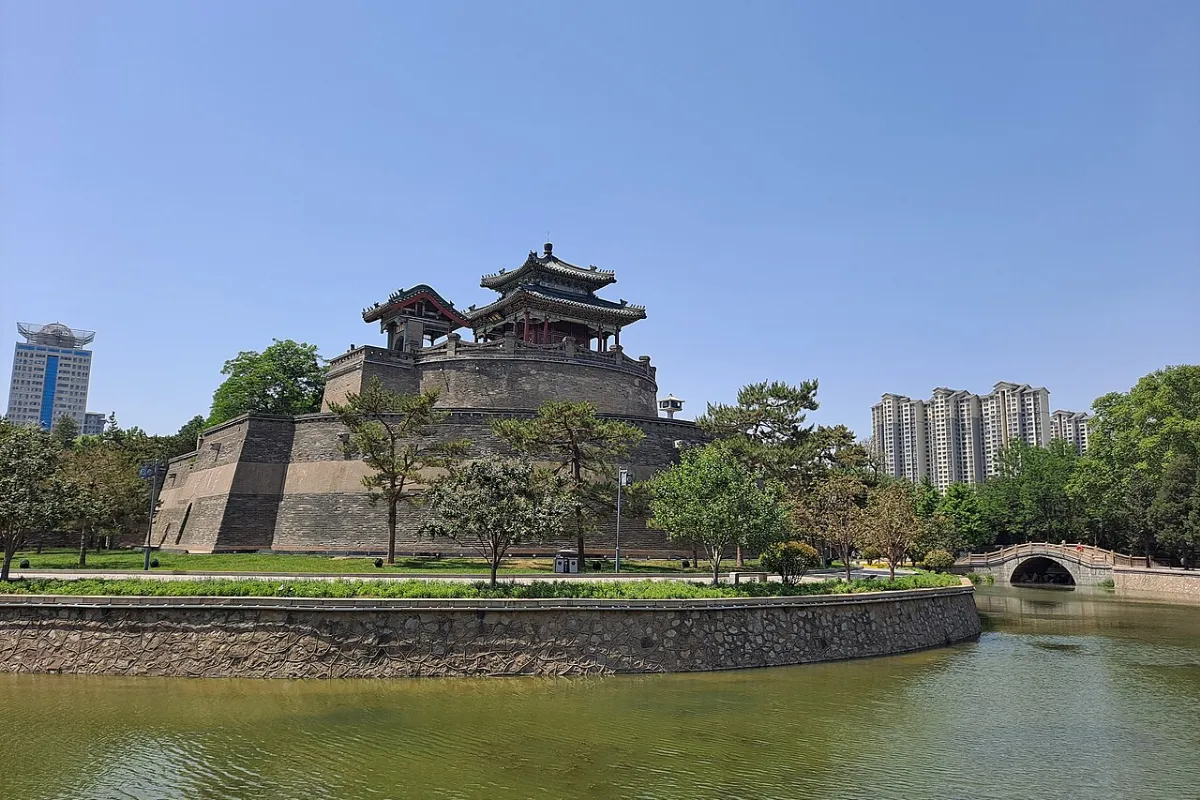
- Guangfu, a Ming walled town on the plain, associated with Taiji masters
- The Linzhang Yecheng ruins, capital of the short-lived Cao-Wei state
What to eat
- Handan is known for its wheaten foods dumplings, flatbreads and knife-cut noodles
- Yimian a local noodle eaten with a thick savoury sauce
- Guangfu saveur fish and the sesame candies sold at the temple fairs
How to plan
Spend a day in the city at the Zhao ramparts and Congtai Park, then take a morning bus to the Xiangtangshan Grottoes for the cave sculpture — allow two hours. In the afternoon drive to Guangfu walled town for the Taiji atmosphere and the moat walk. A second day can reach the Wahuang Gong cliff temple in Shexian, an hour away, where the hanging galleries cling to the rock. Handan works best as an overnight stop between Shijiazhuang and Anyang.
Best time
April–May and September–November
Practical tips
- The grottoes and cliff temples are outside the city; a car or a booked driver saves a lot of waiting
- Many idioms on the signs are untranslated — a Chinese-speaking guide makes the stories click
- Handan is on the Beijing–Guangzhou rail line, so trains in and out are frequent
HSKHSK level 2
This browser has no speech synthesis, so the ▶ buttons stay silent. Everything else works — Chrome, Edge and Safari can read the sounds aloud.