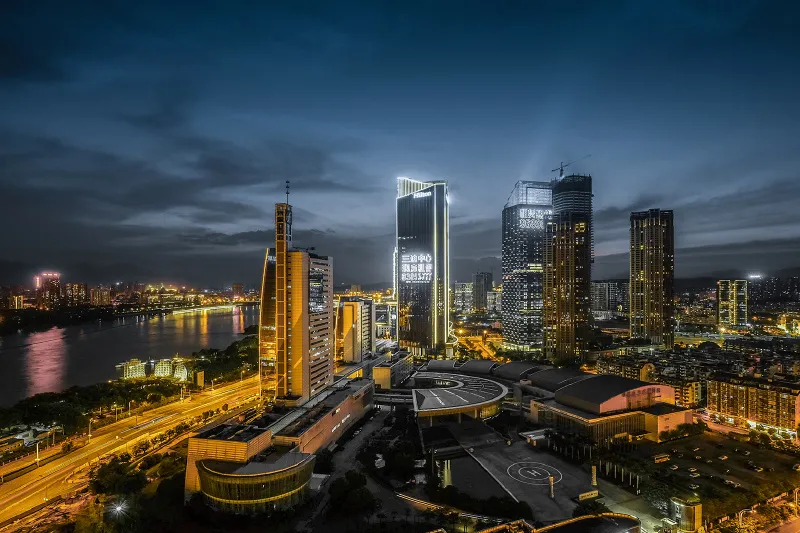
Why this place
Fuzhou has been the capital of Fujian for over two thousand years, and its old quarter is a network of lanes around three hills — a shape of city that survived because its port moved downstream rather than because nothing happened here. It was one of the five treaty ports opened in 1842, and the foreign concession still stands across the river at Nantai. The banyan trees arching over the streets are the city's emblem.
People and culture
- Sanfang Qixiang — three lanes and seven alleys — is not a museum quarter but the address book of modern China: Lin Zexu, who burned the opium at Guangzhou in 1839, was born here; so was Yan Fu, who translated Darwin and Adam Smith; and Lin Juemin, whose farewell letter to his wife before his execution in 1911 is still read in schools.
- At Mawei, downstream on the Min, the Qing built the Fuzhou Arsenal and its naval school from 1866. It was China's first modern dockyard and its first naval academy, staffed at the start by French engineers; the officers it trained went down with the fleet at Weihaiwei in 1895. The site is now a heritage park.
- Fuzhou is the origin of jasmine tea. Jasmine reached China from the west along the Silk Road, and Fujian tea-makers began scenting green tea with its flowers in the Song dynasty; the layered process is still done by hand, and the city remains the reference point for it.
- Lacquerware made without a wooden core — bodiless lacquer — was perfected here, alongside Shoushan stone carving and cork pictures; the three are known locally as the crafts of the banyan city.
What to see
- Sanfang Qixiang (Three Lanes and Seven Alleys) the mansions of Ming and Qing officials, and the Lin Zexu and Yan Fu residences; go into the side alleys rather than staying on the main street
- Yongquan Temple on Gushan, founded in 908, with the thousand-Buddha pottery pagoda and the old stone path up the mountain
- The Mawei shipyard heritage park and the Foochow Arsenal naval school, downstream on the Min
- Nantai Island (Yantai Hill) across the river the 1842 treaty-port concession, with consulates, churches and plane trees
- The Luoxing Pagoda at the river mouth, long the landmark for ships coming up to Fuzhou
- The hot springs under the city centre, which have been in use for 1,700 years and are open to the public
What to eat
- Fish balls (yuwan) minced fish wrapped around a pork centre, springy enough to bounce; the city's signature snack
- Buddha Jumps Over the Wall (fo tiao qiang) the elaborate slow-cooked soup of abalone, sea cucumber and ham, invented here in the Qing dynasty
- Yanpi (meat wraps) paper-thin sheets of pounded pork used instead of dough to wrap a minced filling, a Fuzhou speciality you will not find elsewhere
- Guobianhu (rice-sheet soup cooked on the rim of the wok) and taro paste, plus longan and jasmine tea from the surrounding hills
How to plan
Two days. Day one in the old city: Sanfang Qixiang in the morning, then the hills at Wushan and Yushan, and across to Nantai Island in the late afternoon for the treaty-port streets. Day two: Gushan and Yongquan Temple in the morning (walk the old stone path up, cable car down), then Mawei and the arsenal park on the way back. Keep an evening for a hot-spring bath — the water comes from under the city.
Best time
March–May and October–December
Practical tips
- Sanfang Qixiang is free and open, but the main street is now shops; the houses worth seeing are down the alleys, and several need a separate ticket.
- Mawei is 20km downstream and takes half a day with travel — do not try to pair it with Gushan in one morning.
- Fuzhou's hot springs are genuine geothermal water from under the city, not heated tap water; ask at your hotel which public bathhouse they use.
HSKHSK level 3
This browser has no speech synthesis, so the ▶ buttons stay silent. Everything else works — Chrome, Edge and Safari can read the sounds aloud.