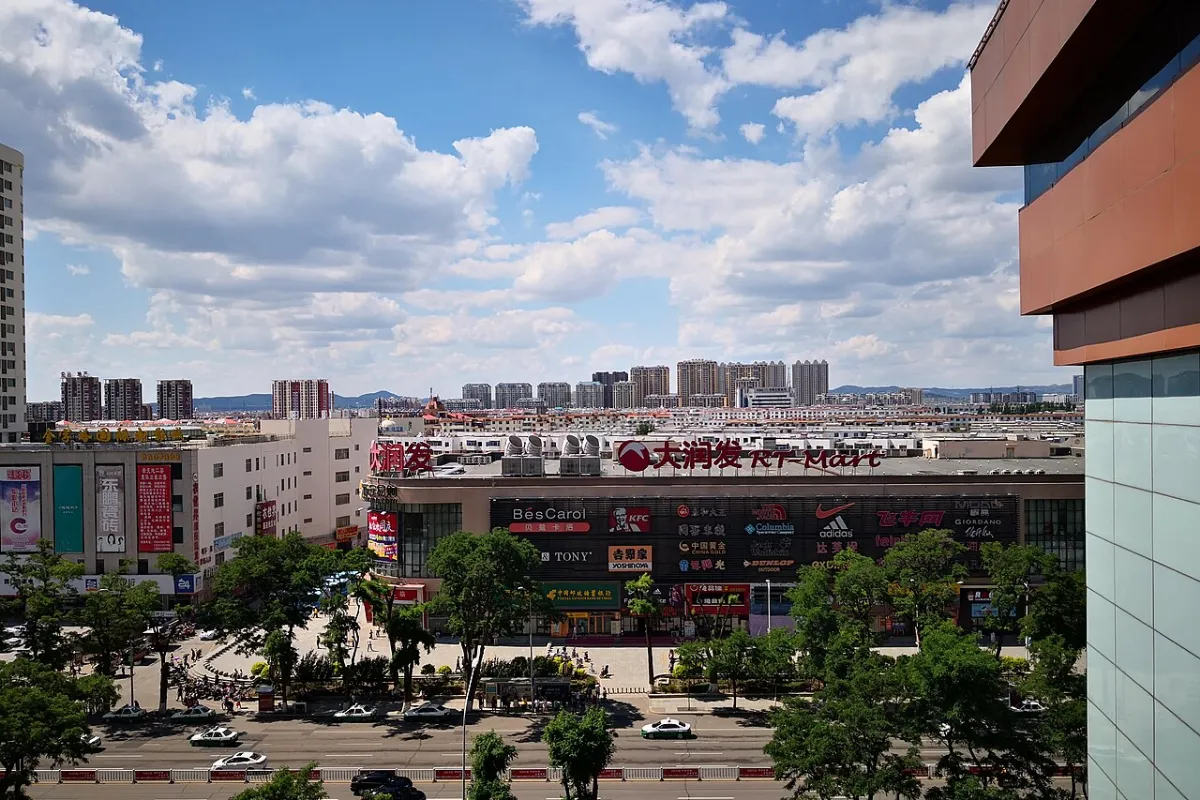
Why this place
Fuxin was a coal city whose mines have closed, and it has turned its spoil heaps into a reclamation park — a rare case of industrial land remade as green space. It sits where Manchuria meets Inner Mongolia, so Mongolian grassland and the Fuxin Mongol Autonomous County bring yurts, horse festivals and dairy foods to the city edge. The Ruiying Temple is a live Tibetan-Buddhist monastery in the county, and the city's shift from coal to tourism and agriculture is a clear example of the northeast's post-industrial turn.
People and culture
- Fuxin was a coal city whose mines have closed, and it has turned its spoil heaps into a reclamation park — a rare case of industrial land remade as green space.
- It sits where Manchuria meets Inner Mongolia, so Mongolian grassland and the Fuxin Mongol Autonomous County bring yurts, horse festivals and dairy foods to the city edge.
- The Ruiying Temple is a Tibetan-Buddhist monastery in the Mongol county, still active with lamas and annual fairs.
- Fuxin's transition from coal to tourism and agriculture is a living example of the northeast's post-industrial shift.
What to see
- Haizhou open-pit mine and the land-reclamation park built over the spoil heaps
- Ruiying Temple a Tibetan-Buddhist monastery in the Fuxin Mongol Autonomous County
- Talin grassland a short drive north, with Mongol herding and summer horse races
- Ulanmuqi mountain and the Qinggou reservoir for forest walks
- The Fuxin Mongol museum on the county's herding and temple culture
- Zhangwu sand dunes the edge of the Horqin desert, east of the city
What to eat
- Mongolian and Manchurian mix mutton hot pot, millet and pickled vegetables
- Northeast dumplings and hand-pulled noodles
- Mongol dairy dried curd (wusu) and milk tea, at the county fairs
- Roast lamb leg over open coals, a grassland feast
How to plan
Day 1: visit the Haizhou reclamation park and the Fuxin Mongol museum in the city, then bus to the Mongol county for Ruiying Temple. Day 2: go north to Talin grassland for herding and, in summer, horse races; or east to Zhangwu for the dunes. The temple is an hour out; the grassland is 40 km north. The Mongol fairs (summer) are the best time, but the temple is worth it year-round.
Best time
May–October
Practical tips
- The Mongol county sites need a bus transfer; start early and confirm return times.
- Grassland weather turns fast — bring a wind layer and sun protection in summer.
- Fuxin has little English signage; keep place names in Chinese for drivers and ask the hotel to write them.
HSKHSK level 2
This browser has no speech synthesis, so the ▶ buttons stay silent. Everything else works — Chrome, Edge and Safari can read the sounds aloud.