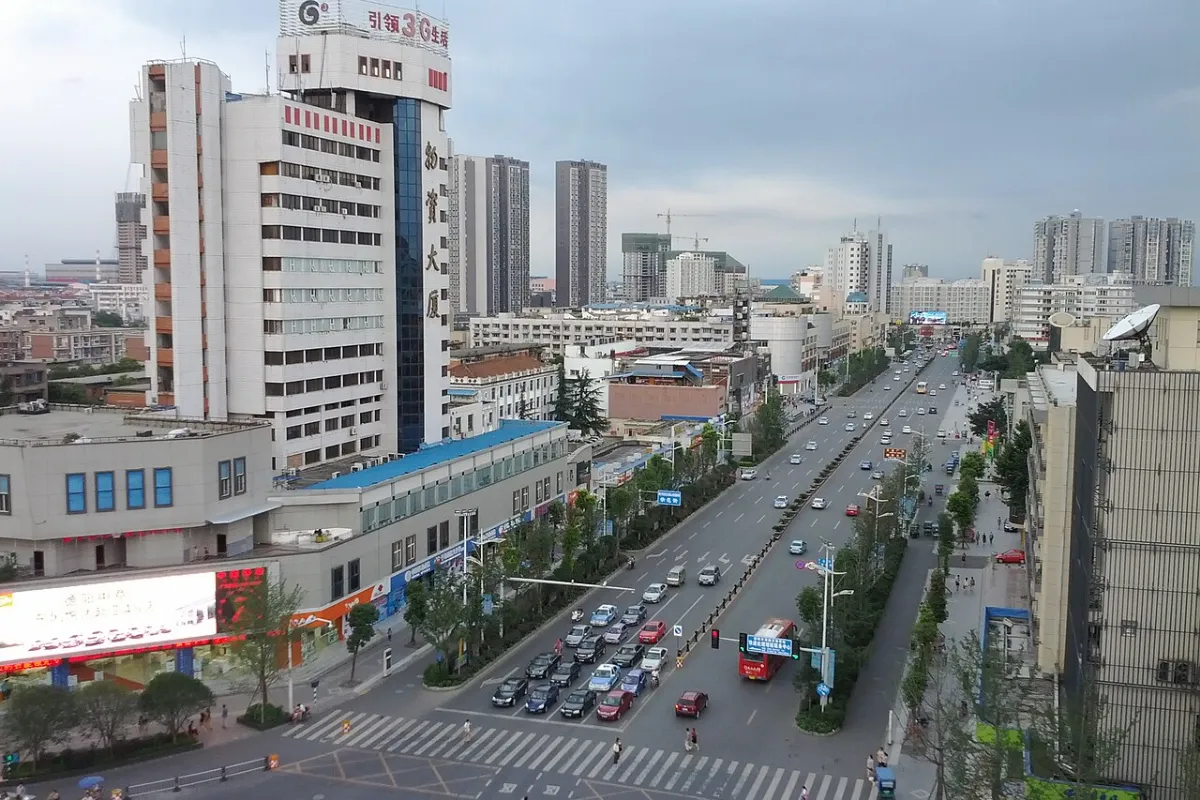
Why this place
Deyang is an industrial city on the Chengdu plain, but its global claim is Sanxingdui, the Bronze Age site at nearby Guanghan whose huge masks, trees and gold wares belong to a civilisation that left no written record and stunned archaeologists when first unearthed in the 1920s. The finds rewrote the story of early China and pulled the centre of ancient Chinese civilisation far to the west. The city also holds one of the largest Confucian temple complexes in Sichuan and a surviving woodblock-print tradition.
People and culture
- Sanxingdui, just north at Guanghan, revealed a Bronze Age culture roughly three thousand years old of extraordinary bronze masks, a gold sceptre and an ivory cache, with no link to the documented Xia and Shang line.
- The later Jinsha culture of Chengdu is closely related, showing a wide ancient state centred on the Sichuan basin before written history and sharing the same artistic language.
- Deyang Confucian temple is among the largest in the province and reflects the plain scholarly tradition that supplied officials to the imperial bureaucracy for centuries.
- As a modern heavy-industry base, Deyang makes power-generation equipment and large turbines, a role that grew after the 1950s and still defines the local economy.
- The Mianzhu woodblock New Year prints are a national intangible heritage, a folk art of carved and hand-coloured images made for the lunar new year.
What to see
- The Sanxingdui Museum at Guanghan, bronze masks, a 4-metre bronze tree and gold wares, with the excavation pits visible.
- Deyang Confucian Temple, a large Qing complex with carved pavilions and a music terrace.
- The Mianzhu New Year print workshop, a centre of traditional woodblock art with demonstrations.
- The Jiannan spring liquor cellars, another old baijiu site with working fermentation pits.
- The Chengdu plain countryside and the ancient Shu irrigation villages west of the city.
- The Pangtong shrine at Luofengpo, a Three Kingdoms site tied to the strategist Pang Tong.
What to eat
- Sichuan cooking with Deyang braised dishes and preserved meats, heavier and oilier than the Chengdu style.
- Mianzhu woodblock-print-themed snacks and the local bean products sold at the morning market.
- Jiannan spring liquor, a famous local baijiu, sampled modestly at the cellar shop.
- Plain-grown rice and fresh vegetables, the base of home cooking here, cooked simply with garlic.
How to plan
Day 1: the Sanxingdui Museum at Guanghan, allow at least half a day because it is the single most surprising archaeological site in China, then back to Deyang for the Confucian Temple and its music terrace. Day 2: Mianzhu for the New Year print workshops and the countryside, with a stop at the Jiannan spring cellars. Deyang sits 40 minutes by high-speed rail from Chengdu, so it works as a half-day Sanxingdui add-on to a Chengdu trip or a relaxed stop of its own with an overnight.
Best time
March to May and September to November; the plain is mild and green in these months.
Practical tips
- Sanxingdui needs a half day minimum and sells out at peak times; book online and go early in the morning.
- From Chengdu, Guanghan is an easy rail hop; many visitors do Sanxingdui as a day trip from there.
- Keep the Confucian Temple and Mianzhu for a second, slower day, and wear good shoes for the temple courtyards.
HSKHSK level 3
This browser has no speech synthesis, so the ▶ buttons stay silent. Everything else works — Chrome, Edge and Safari can read the sounds aloud.