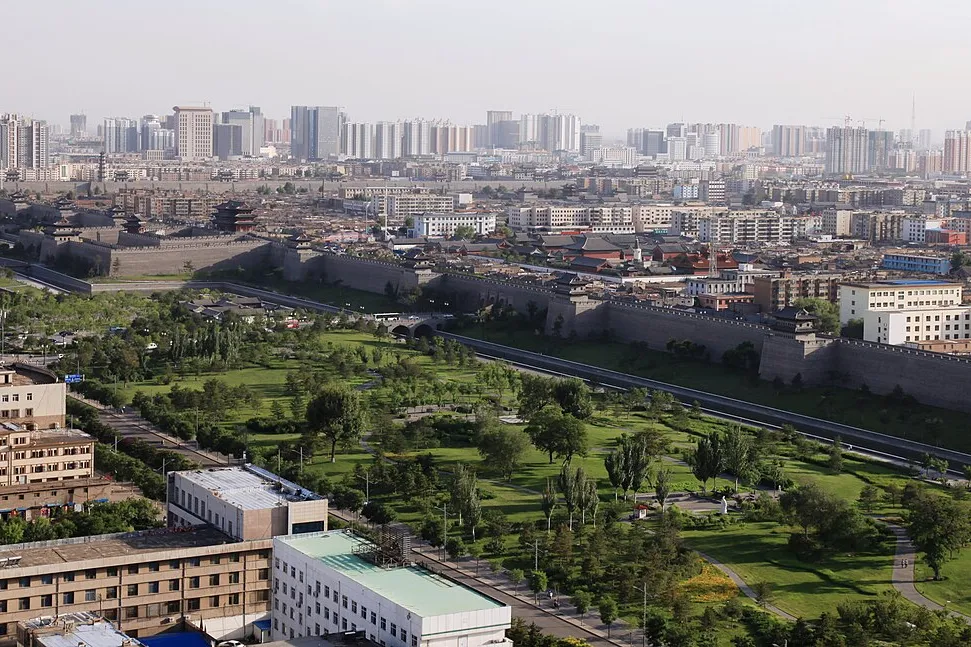
Why this place
Datong was the capital of the Northern Wei dynasty in the fifth century, and the empire carved its Buddhism into the sandstone outside the city — the Yungang Grottoes, with 51,000 figures including a 17-metre seated Buddha. It is one of the three great Buddhist cave sites in China, and it is less visited than it deserves. The Hanging Monastery and the restored Ming wall round out a city that is really a gateway to stone.
People and culture
- Datong was the Northern Wei capital in the fifth century, and the court sponsored the Yungang carvings, which is why the largest Buddhas wear the rounded, Central-Asian features of that era.
- The Hanging Monastery at Hengshan was built into a cliff face in the sixth century, blending Buddhist, Taoist and Confucian halls on a single narrow ledge 50 metres up.
- Datong's Ming city wall was rebuilt in recent years as a vast rectangular rampart with corner towers, a rare full circuit you can walk on in the north.
- The city sat on the coal field that powered Shanxi's modern industry, and the old mining rail still marks the edge of town.
What to see
- Yungang Grottoes 45 major caves, carved between 460 and 525 CE
- The Hanging Monastery at Hengshan, built into a cliff face 75 metres up in 491 CE
- The Nine Dragon Screen and the restored Ming city wall of Datong itself
- Hengshan, the northern sacred mountain, a short drive from the monastery
- The Huayan Temple, a Liao–Jin wooden complex with a grand hall and a library of sutras
- The Datong coal mine museum, for the industrial layer of the plain
What to eat
- Datong knife-cut noodles and vinegar-heavy Shanxi sauces
- Lamb from the surrounding plateau; mutton soup for breakfast
- Youmian (oat noodles) with a savoury topping, a northern staple
How to plan
Two full days. Day one to Yungang in the morning — go early for the side light on the big Buddha — then the Huayan Temple and the Nine Dragon Screen back in town, finishing on the restored wall at dusk. Day two to the Hanging Monastery and Hengshan; the cliff temple needs two hours and the mountain a half day. Both are west of the city, so a hired car or the tourist bus makes the loop smooth. Datong is on the high-speed line from Beijing and Xi'an.
Best time
May–October; winter is freezing and the grottoes are outdoor
Practical tips
- Yungang is 16km west of town; go early, the light on the big Buddha is best in the morning
- The Hanging Monastery is small and crowded by midday; arrive when it opens
- The city wall is walkable after dark when the towers are lit
HSKHSK level 3
This browser has no speech synthesis, so the ▶ buttons stay silent. Everything else works — Chrome, Edge and Safari can read the sounds aloud.