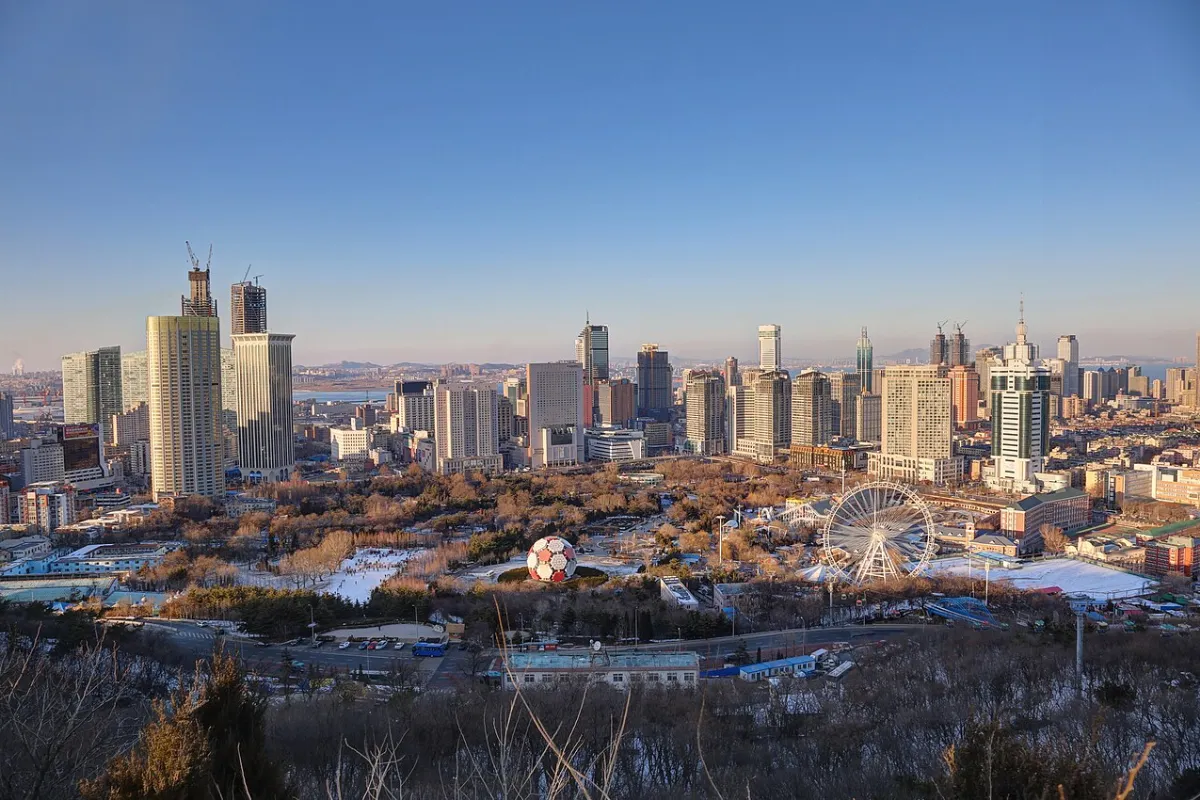
Why this place
Dalian was leased to Russia in 1898 and ruled by Japan from 1905 to 1945, which is why its centre has a radial street plan, a Russian-style church and a still-running tram system. Lüshun at the peninsula tip keeps the forts of the 1904 Russo-Japanese War. After 1945 the city rebuilt around shipping, oil refining and a big harbour, and its clean seafront and cool summers made it the northeast's most liveable city, with beaches and cliffs running down the Liaodong coast.
People and culture
- Dalian's layout came from Russia and Japan: a round central plaza, a tram network and a port built for empire, so the old centre still reads as a foreign-built city more than a Chinese one.
- Lüshun (Port Arthur) was the scene of the 1904-05 siege; its hill forts, naval museum and prisoner-of-war sites record one of the fiercest battles of the era.
- The city's football club and its seafood trade are part of local identity; the morning fish market supplies abalone, sea cucumber and urchin to tables across north China.
- Lushun leaf mustard and salted seafood (xianshi) are a coastal preserving tradition going back centuries among Liaodong fishing villages.
What to see
- Zhongshan Square a round plaza ringed by early-20th-century banks and a former Japanese town hall, best seen on foot
- Binhai Road a cliff-hugging coastal drive from Bangchuidao to Fujiazhuang, walkable in sections
- Xinghai Square built on reclaimed land, with a seaside promenade and the old tram terminus
- Lüshun (Port Arthur) the peninsula tip with Russian and Japanese forts, a naval museum and the 1904 war sites
- Laohutan Ocean Park a coastal theme park with aquariums and the Bangchuidao islet view
- The Dalian Modern Museum charts the city's railway-and-port growth from the 1890s
What to eat
- Dalian seafood abalone, sea cucumber, scallops and sea urchin, steamed or in congee at the bayside restaurants
- Grilled squid and seafood skewers at the night markets near Qingniwa and Xinghai
- Lushun salted fish with cornmeal cake (xian yu chi bangbing), a fishing-village staple
- Russian-influenced breads and sweets left from the port's foreign era, found in the old centre
How to plan
Day 1: ride tram 201 from the centre to Zhongshan Square, walk the Russian-era block, then take a bus to Xinghai Square and the seafront promenade. Day 2: hire a car or join a coastal bus along Binhai Road to Laohutan and Bangchuidao, then continue to Lüshun for the war forts and the naval museum. Buses and the coastal tourist line connect these; allow a full day for Lüshun as it is about 50 km down the peninsula.
Best time
June–September for the sea; September–October is warm and clear with fewer people
Practical tips
- Dalian's trams (lines 201, 202) are real heritage — ride at least once; buy a rechargeable bus card at any convenience shop.
- Lüshun is far (about an hour by bus); group it as a full day and check the last return bus so you are not stranded.
- Sea breeze makes the coast cooler than town in spring and autumn; bring a wind layer even when the city is warm.
This browser has no speech synthesis, so the ▶ buttons stay silent. Everything else works — Chrome, Edge and Safari can read the sounds aloud.